Miss Rosen
  • Home
  • About
  • Imprint
  • Writing
    • Books
    • Magazines
    • Websites
    • Interviews
  • Marketing
    • Publicity
    • Exhibitions & Events
    • Branding
  • Blog

Posts tagged “Studio 54”

Rose Hartman: Studio 54: Night Magic

Posted on February 10, 2021

Bianca Jagger on a white horse that happened to be inside Studio 54 on her birthday in 1977. Rose Hartman / The Artists Company

On April 26, 1977, hundreds of the world’s cultural elite had gathered outside 254 West 54th Street, desperate to get into the event of the year: opening night at Studio 54. Those in the know snuck in through the 55th Street side of the former CBS TV studio turned nightclub, while icons like Frank Sinatra and Warren Beatty had no such luck. Failing to get the red carpet treatment, they left — missing out on all the fun.

.

In a scene out of Lifestyles of the Rich and Famous, future TV host Robin Leach escorted preteen superstar Brooke Shields through a crowd that included grand dame Diana Vreeland, country music star Dolly Parton, fashion designer Halston, socialite Bianca Jagger, actress Margaux Hemingway, and pop star Cher.

.

The celebrated Alvin Ailey dancers, clad in costumes designed by Antonio Lopez, turned the party out with a live show. As Anthony Haden-Guest reported in his book, The Last Party, a doctor opened a massive bottle of Quaaludes, sharing the pills far and wide. After the hypnotic drugs kicked in, an orgy broke out. It was Sodom and Gomorrah in gold lame and peach chiffon, white suits and satin gowns. 

.

Read the Full Story at Blind

.

Rose Hartman. Bethann Hardison, Daniela Morera & Stephen Burrows at Studio 54 party for Valentino, New York City – 1977
Categories: 1970s, Art, Blind, Exhibitions, Fashion, Manhattan, Photography

Remembrances of Studio 54

Posted on June 13, 2018

Pat Cleveland and Andre Leon Talley. Photo: Copyright Dustin Pittman

Glitz, glam, and glory – Studio 54 had it all. The epicenter of the New York disco scene in the 1970s, the infamous nightclub was a symbol of hedonism – a potent brew of celebrity, sex, drugs, and decadence.

.

In 1977, co-owners Ian Schrager and Steve Rubell, two friends from Brooklyn, converted an old CBS television studio into a magical space where Hollywood stars, fashion designers, performers, socialites, artists, models, and street legends would dance the night away.

.

For 33 months, Studio 54 made headlines for its outrageous stunts, becoming the stuff of legend until it all came crashing down when Schrager and Rubell were arrested for tax evasion and ended up serving 13 months in prison. In 1989, Rubell died from complications due to AIDS, while Schrager turned his life around, becoming one of the most significant hoteliers of our time. After being pardoned by President Barack Obama in January 2017, Schrager broke his 40-year silence, finally telling the true story of Studio 54.

.

On Friday (June 15), Studio 54, the first documentary about the famed nightclub will officially release. In celebration of this film, we spoke to its director Matt Tyrnauer and a host of Studio 54 insiders, who share their memories of the endless nights spent partying, rubbing shoulders with everyone from Elizabeth Taylor, Jackie Kennedy Onassis, and Diana Ross to Michael Jackson, David Bowie, and Karl Lagerfeld.

.

Read the Full Story at AnOther Man

.

Palmoa Picasso. Photo: Copyright Dustin Pittman

Categories: 1970s, AnOther Man, Art, Fashion, Manhattan, Music, Photography

Anton Perich: True Revolutionary

Posted on July 27, 2010

Candy Darling, Photograph © Anton Perich

There’s so much I could say about Anton Perich, but it’s altogether too much for me to try to put it into words. I’ll leave it to the incomparable Mr. Perich to do this better than I ever could.

.

Your life history is fascinating! Please talk about your work running an underground film program in Paris in the late 1960s.

.

AP: Thank you. I was making some super 8 movies then. All lost now, except one, “Le retour d’ Eurydice”, in which I was starring. Raphael Bassan directed it. An early French underground film, recently screened at Beaubourg. This was 16mm production, and well preserved.

.

Anyway, there was this wonderful villa with gardens on Boulevard Raspail, just a few short blocks from La Coupolle. It was housing the old American Center, a complex of art studios and various music and theater activities.  Later they tore it down to put the Carier skyscraper. I saw there many international productions and created a few. But one thing was missing, underground films. So I proposed to show films there one night weekly, in a small studio in the basement, and sometimes in the gardens, on the grass. It was a success.  I was making films and my friends were making films and there was no place to show them regularly in Paris.

.

Of course, we were all spoiled by La Cinematheque, spending days there watching classics and contemporary films. But there was no room there for our “little short marginal works”. And of course, revolutions are always made by the marginals.

.

In the Sixties, the New York Underground cinema were well defined by Warhol, Mekas, Jack Smith, Brackage and others. A whole different scenario was happening in Paris. There was Godard and his gods reigning on the Parnassus, making a wonderful narrative movies, not much questioning Cinema itself. There was also Garell, Clemanti, And there was Etienne O’Leary and Michel Auder. The great Michel Auder, who questioned everything. In 1970 he abandoned film totally and converted to video. I screened his films there the very first night, and often afterwards. He supplied the projector that he somehow inherited from the French Army, I guess he knew de Gaulle, or was his nephew.  Another great French underground filmmaker was Raphael Bassan. But the real revolution in Paris film world were maid in the Fifties by the last great god of the avant-garde, Isidore Isou and his prophet Maurice Lemaitre. In the early Fifties they made movies with the found footage, various acids and paints. They made the cinema discrepant, totally    separating the sound track from the visual content, as if telling two different stories in the same time.  Of course, most of the audience walked out. No one ever did it before. Debord took it all from them. Debord was Lettrist before he became Situationist.

.

Anyway, I screened some of those films too.

.

I was associated with Lettristes from 1967 to 1970. I worked with Lemaitre and Isou, painting, writing poetry, shooting films, doing the shows. Lettrism was my school. I was educated by the two greatest artists and thinkers of that time. Of course Isou predicted the 1968 revolution and went mad. We did some performances at L’Odeon, it was occupied, Non-stop 24 hours spectacle. I spent few nights there.

.

I think that the Revolution of 68, the Paris Spring is grossly misunderstood today. It was not the flesh and blood revolution, no guillotines. It was the revolution of spirit, of the young, so unique in the history of revolutions. It paved the way for other bloodless revolution in the Eastern Europe. Imagine, the Communism died the bloodless death. Tell it to Stalin, or Lenin.

.

I lived my own revolution there. I became something else at 23. It is difficult to transform oneself, only fantasy and revolution will do it. And spirit. And resurrection. And the fire in Paris streets. And “sous les paves la plage”. The greatest slogan ever written.

.

To get back to films, I did show some Warhol films, and Mekas.

.

The legendary Pierro Heliczer came from New York and introduced his films. Taka IImura came there with his films as well, and many other underground filmmakers, French and international.

.

Robert Mapplethorpe, Photograph © Anton Perich

Why did you decide to come to New York in the 1970s? What was the city like back then, particularly for artists and radicals?

.

AP: I came to New York in 1970. At that time I was interested in many things that were coming from New York. Underground films. Pop Art. Experimental theater. Warhol’s Factory. Jonas Mekas. Julian Beck. John Cage. John Chamberlain. Minimal Art. Earth Works. All of that new, foreign to the Europeans,  miraculous and fascinating. It was all so American. Paris didn’t have any of that. It had a vacuum and suffocating atmosphere. They were mourning the revolution of 68 instead celebrating it.

.

In NY it was all celebration, non stop celebration of the young, creative and the free. Woodstock was a celebration. Max’s Kansas City was celebration. Punk was celebration, music, fashion and attitude. NY Dolls was celebration. Transvestites were celebration. Taylor Mead was celebration, Warhol, Factory, Candy Darling, Jackie Curtis, Wayne County, Andrea Feldman, John Waters, John Chamberlain, John Cage. Lou Reed.  Forest Myers was celebration. His SOHO wall was much better than that other wall in Berlin. And it is there forever in the full glory. Smithson and Heiser were doing God’s work, transforming the landscapes in the great vacuums of America.

.

Andrea Feldman, Photograph © Anton Perich


In 1973, you produced the first underground TV show which ran on Manhattan public access television. Please talk about your ideas about video art and how you made use of public access TV to explore them.

.

AP: I quit film and was shooting video. I realized that it was the gun of the future. I realized that the freedom to bear video was the same as the freedom to bear arms. And with a such powerful instrument you dream of changing the world. You dream revolution. You remember I came to NY via Paris and brought a symbolic cobble stone with me, you remember: “under the cobble stones the beach…”Other so called video artists were showing their videos at the galleries and museums, the most safe places in the world. I never had a video show in a gallery or museum. I would be ashamed of it. Such bourgeois establishments. Suffocating the freedoms that video was to bring.

.

I saw the video camera as the most subversive weapon on the world, and you don’t take it to the gallery, you take it to the American TV. There was Cronkite there and Barbara Walters, but you replace them with Taylor Mead, Danny Fields  and Susan Blond. Naked aggressive and radical, hating everything the TV had to offer until that day. I did it on Public Access in January 1973, in the prehistoric times of video. I took my one hour weekly show “Anton Perich Presents” there.

.

I realized then that the free Public Access was like youtube today. As the matter of fact, like the Internet today. No one realized that it was so powerful, radical and transformative. TV was the last stronghold of American comfort and the superficial perfection. Clean as the soap commercials. But while the soap washed clothes, the TV bleached the brains. The absolute pristine color TV meets the badly produced black and white airings, badly filmed and with bad sound, badly dressed and badly behaved stars of the underground. The Television has never seen this content before. It was the first. Yes, I broke the ice. After me came the flood. Look at the cable today. Yes we made a revolution, single handedly. It was about freedom.

.

Charles James and Model, Photograph © Anton Perich

Please talk about the inspiration to start NIGHT Magazine in 1978. Why did you decide to get into publishing, and what was it like to produce print back in the days?

.

AP: Yes, it was all about inspiration. It was about poetry of the photograph. NIGHT was this wonderful title idea for a new, oversized underground publication. I designed it and published it. Absolutely oversized, glamorous, elegant, sensual on a smooth almost a bed sheet-size beautiful white paper. It was in 1978. I was at the Studio 54 shooting every night fabulous pictures of the most fabulous people in the World. For me photography is an obsession, the white substance.

.

I was shooting for the Warhol’s Interview magazine and for me that was not enough, so I had to self-publish, as it is called today. Well, it was marvelous to capture all this nightly energy on the pages of NIGHT. Hundreds, thousands of photos. From Victor Hugo to Patty Hansen and Jerry Hall. Bianca, Esme, Carole Bouquet. All dressed on the covers of VOGUE and topless in NIGHT.

.

I wanted to publish every photo I ever took. It was the Facebook for the Studio 54 regulars. But my photography here is something else. It is celebrated now, looking so fresh and contemporary, as if it was taken today. All great photography is timeless, looks like taken today, and not yesterday. The dated photographs don’t speak to me, cannot establish a communication with them. It is like yesterday’s papers. The paparazzi work. NIGHT is not a yesterday’s paper. It told the future over 30 years ago.

.

I still publish NIGHT today. It is my way of questioning the Internet. If we don’t question it and if we don’t doubt it  we will end up in the near future having everything on our fingertips and nothing in our arms. NIGHT is not on your fingertips, it is in our arms, big beautiful, physical, not virtual. Hand-made, and not LED device.

.

Model wearing Charles James, Photograph © Anton Perich

Throughout this time you were also taking photographs of everyone on the scene, from Andy Warhol, Candy Darling, and Jean-Michel Basquiat to Patti Smith, Robert Mapplethrope, and Tennessee Williams. What was it like to photograph celebrities and personalities at that time?

.

AP: I didn’t photograph much celebrities, they were mostly tourists. At Studio 54 and Max’s. Truman was a regular, Bianca was a regular.  I took only 2 photos of Basquiqt, one published on the first page and the other on the last page of his giant Milano catalogue. I photographed Andy for the only one reason, to capture his shyness. I photographed Candy endlessly just to capture the tranquility of her eyes. I photographed Mapplethorpe to capture l’enfant terrible. I photographed Patti Smith to capture Rimbaud or perhaps to capture the rainbow in the darkest corners of Max’s.

.

www.antonperich.com

Categories: 1960s, 1970s, Art, Manhattan, Photography

Dustin Pittman: Cast of Characters

Posted on May 12, 2010

Halston, 1979, Photograph © Dustin Pittman

.

I first met Dustin Pittman when curing an exhibition about New York City in the 1970s. The depth of his archive was so profound, I felt like I traveled back in time. Since then, Dustin has been shooting New York’s never-ending parade of characters unlike anyone else in the world today. Dustin graciously agreed to do an interview showcasing his old and new school CAST OF CHARACTERS.

 .

.

WoW! Your perspective on New York nightlife is truly your own and makes me think  “The more things change, the more they remain the same.” Does this ring true or false to you?

.

Dustin Pittman: I think that it definitely rings true. As a photographer I am always looking to fill my frame and capture new and fresh thoughts and concepts from my subjects. It doesn’t matter if I stood in the middle of the dance floor at Studio 54, or Paradise Garage in 1978 or backstage shooting fashion in 1976 or working with International designers in their atelier or the Boom Boom Room at the Standard in 2010.  I’m always searching, looking, always ready, on guard to capture the moment. I have been photographing people for over 40 years. In the studio. On the streets. Way Uptown. Way Downtown. New York, Paris, London, Milan, Tokyo, Europe, Africa, India, Middle East, the entire World. Day for Night. Night for Day.

.

I love the way people look. It is their individual “look” and they “own it”. They are influenced by their history, their customs, their beliefs. You can’t take that away from them. They are who they are. The way they “carry” themselves. Their body language. The way they stand. Their heads, necks, arms, backs, shoulders, torsos, legs, feet and, of course, their FACES AND EXPRESSIONS.  I love people for that. That’s the difference between the 70’s and now. There were no cell phones, no laptops, facebook or twitter. People connected with other people in “real people time”. They didn’t  need to have their guard up all the time. They never anticipated the “snap of the shutter”. They just went about their business. People being People. Individuals being Individuals

 .

.

Now with all the blogs, vlogs and instant street photography people are ready for you. They are waiting for you. They are strategically dressed and screaming “take my picture”.  But, having said. That is the way it is. I accept it. It is not the 1960’s, 1970’s, 1980’s, 1990’s, etc, the time is now. I honor that. We may glamorize the past, but we honor our present. I honor that in people. New technology has ushered in new ideas and tools. People are more willing to explore themselves. They know who they are. They know their culture. I AM A HUGE FAN OF THAT.

.

Now I have the opportunity to shoot with traditional cameras as well as the latest digital cameras with HD Video output. More technology, more opportunities. Old School and New School as one.

 .

.

Looking through your work, I was overwhelmed by the abundance of style. Everyone you photograph uses their face and body as a canvas. What are your thoughts on such personal expression?

.

DP: My style of photographing has always been the “Polaroid School of Photography”  SPONTANEITY. I have always been in the “cinema-verite mode. What does that mean. I leave people alone. I let them “be”. I let them interact . I want them to show me their beautiful hearts and souls. I love their life. Past and Present.  I don’t want to destroy that precious “moment”. I let them perform. I got that from Andy Warhol.

.

In the early days we used to go out to dinners, events and parties together with our cameras always “cocked”. I got it from shooting videos of the Warhol Superstars back in the 70’s. I got it from the countless thousands of Fashion Designers, Actors, musicians, and street people that I have photographed throughout my career. I got it from John Fairchild, the head of W. We traveled the around the world photographing inside the fashion ateliers together.  I got it from Anna Wintour. I got it from Gloria Swanson. I got it from Andre Leon Talley. I got it from Carrie Donovan. We would travel Paris, Milan, London and New York together. I got it from Toni Goodman, Vogue’s Creative Director and I got it from the Masters of Street and Portrait Photography way back in the 60’s and 70’s.  Photographers like William Eggelston, Robert Frank, William Klein, Eugene Smith, Larry Clark, Nan Goldin,  Diane Arbus, Helen Levitt, Elliott Erwitt, Danny Lyons, Garry Winogrand, Bill Cunningham, Robert Mapplethorpe Todd Popageorge,  and many more.

.

We would work the streets and rooms together all night long and into the next day, and then into the night. There was no sleep for me during those years. Sleep. Who needed it. As long as my cameras were loaded and there was enough film in my pockets, that was my “fix”. My light is always on. When I photograph my subjects I look, think and compose before I snap my shutter. I never “ponce”.. I love to respect the moment, always letting it unfold. I let it happen. Never do I go into the frame and ask my subjects to pose or to “look this way” or stand this way. That is a different photograph. That is a photograph for the “studio”. Or, dare I say the word, the “poparazzi” photographers, who I am not a fan of.

.

Mudd Club, 1978, Photograph © Dustin Pittman

.

Who is your ideal subject?

.

DP: My ideal subjects are the “untouched people on the streets of the world”. People are People and I love them for just being Who They Are.  People are my “Celebration of Life”. Young or Old, To photograph youth, from birth to death at any age. ROCKS.

 .

.

When did you move to New York and what was the city like back then? How was it being a photographer, getting access to celebrities of all kinds?

.

DP: I moved to New York in 1968 and I was considered “street cool”. What a time it was. Right on the cusp of exploring “free expression” in the arts. Liberation and Hedonism were my themes. Film, photography, dance, performance art, theatre, music, fashion, poetry, etc was flourishing. It was a renaissance again. My renaissance. I spent 3 weeks photographing the happenings and lifesyle at the Woodstock festival before it even started. The  70’s and 80’s was a great time for photographing. Max’s Kansas City, Mudd Club, CBGB’s. I photographed the first Gay Pride parade in Greenwich Village  in 1970 and the 1st Woman’s Rights parade in the early 70’s.

.

I was the very first fashion photographer photographing backstage fashion in the 70’s. It was just myself, the designers, hair and makeup and the models. Now there are thousands backstage and thousands trying to get into the tents. In the 70’s and 80’s,  I used to gather bunches of people and we used to spent the rest of the entire night and into the day shooting short films, movies and photographs. It was that easy.  Access to people was easier. You could do what you wanted. You didn’t have to give up your photographic rights in order to capture a person, scene or event.

.

Betsy Johnson, 1979, Photograph © Dustin Pittman

.

Having been on the scene for three decades, how would you best define the essence of New York’s nightlife?

.

DP: I feel that New York nightlife is and always will be the driving force behind discovering and creating new ideas and trends. What propels that is the driving creative energy nightlife sucks in and out of you. Say what you want about “hanging out” at night, but one can always find something special to document happening somewhere. In the 70’s and 80’s, it was unthinkable to leave Manhattan for a party, show or event.  Now the big advantage is that New York nightlife has expanded to the boroughs. Williamsburg, the Bronx, Greenpoint, Bushwick, Gowanas, Richmond Hill, Long Island City. Artists are always looking for cheap workable space for their studios, galleries and performance events and these areas fit the bill. Having said that, because of this change, it has given us more opportunities. Anything and Everything is possible.

.

Iris, Photograph © Dustin Pittman

.
www.dustinpittman.com
www.poparchives.com

Categories: 1970s, 1980s, Art, Fashion, Manhattan, Photography

Maureen Valdes Marsh: 70S Fashion Fiascos

Posted on April 21, 2010

.

Ohh lawd have mercy!

.

I remember the 70s all too well, mostly because I was still rocking bellbottoms in the 80s (my parents had no shame, giving me six-year-old hand-me-downs to wear with my lil Shari Bellafonte-afro-on-a-white-girl hair). It might have been a good look—ten years earlier. But thinking of it now, maybe my parent’s disregard for style is the thing that got me started on vintage fashion, thrift shops, and returning over and over again to the decade of my birth.

.

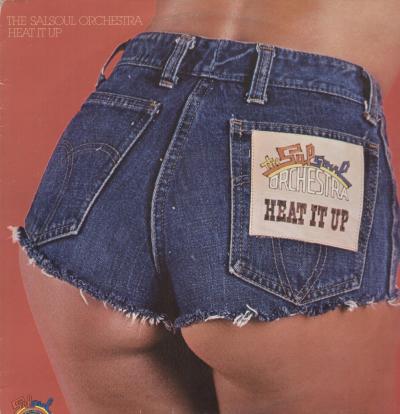
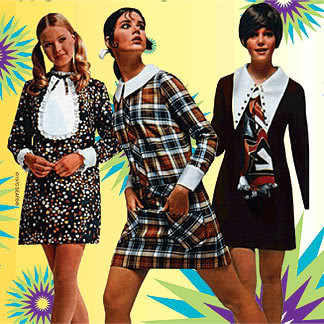
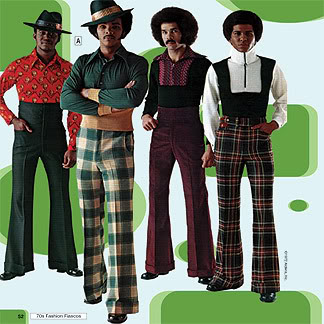
I came across Maureen Valdes Marsh’s 70s Fashion Fiascos one evening while doing research for That 70s Show, my tribute to New Yawk in the the decade that launched hip hop, punk, disco, and graffiti to the world. By random chance I knew the publisher, who introduced me to Maureen. Our connection was instantaneous, and since then I have enjoyed her brilliance, wit, and aesthetic sensibility. She wrote this essay on 70s fashion for me, and for the first time I am publishing it in full, along with a selection of images from her book, as well some album covers that illustrate her point.

.

.

70s Fashion Fiascos
By Maureen Valdes Marsh

.

Like a slow turning storm, it spread further and further out from the hub of urbanity until slowly—carefully—it rolled under the crack of suburbia’s front door. Like smoke, like mist, it couldn’t help but leave its fingerprints on everything it touched.  “I am here,” fashion whispered. “I am here.”

.

In between the free love of Woodstock ‘69 and the 1980 death of John Lennon lay a decade that would come to be remembered not only by its historical events—the shootings at Kent State, the end of the Vietnam War, the resignation of a president—but also for its pop culture.

.

1970s pop culture wasn’t simply about the excesses of Studio 54 or the squeaky-clean images emanating from the Donny and Marie TV show. The true pop culture of America lay in the day-to-day world of suburbia. As suburbanites, we showed our tender, compassionate side by how we tended and pampered our Pet Rocks. We showed our tolerant side by the patience we exhibited while waiting in endless gas lines. We showed our exuberant nature by the fervor with which we Bumped and Hustled on the disco floor. But perhaps the biggest and most lasting slice of 70s pop culture was in the clothes we wore.

.

Image from 70s Fashion Fiascos

.

Free from the constraints of the 1950s and peppered with the new found spirit of the 1960s, fashion in the 1970s took on a life all its own. Flamboyancy was no longer reserved for the young, rich, or famous. Flamboyant urbanity took a short ride over to suburbia’s neighborhood where it was welcomed with open arms.

.

When you look at the lack of choices women faced in the early 1970s, it’s no wonder they became angry enough to burn their bras in protest. It seems in hindsight, however, that they were burning the wrong garment. Even though bra burning was a symbolic act of women’s liberation, was it really the brassiere that was stifling women in the fashion sense? Or was it the overwhelming, in-your-face choices the fashion industry was rapidly throwing at them that made women strike the first match? There was the mini skirt, the midi skirt, and the maxi skirt. Comical circus-tent palazzo pants, sideshow pantsuits, and who can forget clunky, funky, and chunky—more commonly referred to as platform shoes.

.

.

After years of being regulated to the same look, the same uniform Donna Reed-style apparel, the same rules of acceptable/unacceptable dress norms, women were now being overwhelmed by the choices laid out for them. It’s something that we can’t comprehend today. We are used to a society where individuality is the norm, freedom of choice the rule. But for a woman entering the 1970s, freedom of fashion choice created a kind of culture shock. It was like being a kid set loose in a candy store: At first you can’t get enough; everything tastes sweet and delicious. But sooner than you’d imagine, your stomach (and your wallet) start to ache until at last you scream, “No more, please!”

.

Image from 70s Fashion Fiascos

.

In the meantime, it was no different for the male of the species. They too were under a barrage of rapid fire fashion bullets. The first rounds out of the chamber were, fortunately, blanks such as the uninspiring “Unsuit”— take one men’s suit jacket, remove the sleeves, scoop the front, slap a hip belt around it and voilà!, the Unsuit. The hot and lethal hits came in the form of plaids intense enough to be seen from the Concorde and platform shoes high enough to garner the American Medical Association’s official disapproval. But none left a lasting impression quite as strong as the posthumously awarded ‘king of the ‘70s’—the leisure suit.

.

Once hailed by top designers John Weitz and Calvin Klein as a garment with staying power, the leisure suit was ostracized from the kingdom of en vogue before the 1970s ever came to an end. Just as it had swiftly risen to the top of fashion, it fell into the leagues of comic relief twice as fast.  Today we laugh at the cheesy styles, feminine colors, and garish plaids. But what we seem to have forgotten is that the leisure suit did more than just provide us with years of laughs. The leisure suit helped men open themselves up to new ideas in clothing. It allowed them to experiment outside of the style box they’d been locked in for too many years. If the 1970s had passed without the leisure suit, “business casual” for men might never have developed as soon as it did. The leisure suit may have been a fashion catastrophe, but it laid the groundwork for men to strut their fashion stuff for decades to come.

.

.

As the decade came to a close, the fashions we now so closely associate with the era began to lose their staying power. Polyester garments were cast aside for a return to natural fibers. Women set aside their Day-Glo jumpsuits in exchange for tailored suits. Men replaced their loud, garish, wild-print shirts with muted earth tones and subtle patterns. Sky-high platform shoes were brought back down to earth in the form of comfortable flats. And all those millions of polyester leisure suits? Well, they were shuttled off to the Salvation Army, to await a time when, thirty years later, a new generation would rediscover disco, funk, and That 70s Show.

.

I LOVE CHARO

Don’t Stop, Get It, Get It

Categories: 1970s, Art, Fashion, Photography

Maripol Shot Madonna

Posted on August 13, 2009

Madonna

Maripol – Madonna

 .

Maripol’s work as an art director and designer has influenced popular movements in music, fashion, and art since the early 1980s. She was the founder of Maripolitan Popular Objects Ltd., a fashion accessories company that also designed merchandising for Madonna’s “Like a Virgin” tour. Maripol has art directed films by Marcus Nispel and Abel Ferrara; and music videos for Cher, D’Angelo, Elton John, and Luther Vandross. Her clients also include Kodak, L’Oreal, Panasonic, and Peugeot. Maripol’s work has been exhibited at P.S.1 Contemporary Art Center, Deitch Projects, the Robert Miller Gallery, New York; Musée Maillol, Paris. Maripol has produced films including Downtown 81, which she also art directed, Just an American Boy by Amos Poe, and Face addicts by Edo Bertoglio. She has been published in The New York Times Magazine, WWD, ELLE, i-D, V Magazine, Anthem, Black Book, Nylon, Trace, InStyle, Time Out New York, and The Village Voice, Kurv among countless others. Maripol’s books include Maripolarama (powerHouse Books, 2008) New York Beat: The Making of Downtown 81 (Petit Grand, 2001) and Mes Polas: 1977–90s (Art Random,1990). Maripol lives between Paris and New York with her teenage son Lino.

 .

 Maripol discusses her work, Madonna, Danceteria, NYC, 1982, selected for publication in Who Shot Rock & Roll by Gail Buckland (Knopf, October 2009, $40).

 .

Tell me about how you came to be carrying around your Polaroid camera at parties? I ask as the Polaroid is (and was) something so special; before digital technology it was the instant photo; and even now it is so much more—it preserves the photograph as an object (and not just an image/scan). What was it about the Polaroid that had you spending crazy $$ on film in order to get these photos, and how did people react when you asked to shoot them?

 .

Maripol: I carried my camera everywhere indeed and I still have it; its the brown leather clad SX70s. I took it to Studio 54, to Mudd Club, at Fiorucci , on weekends to Montauk, in bed (ha-ha). It’s true it was kind of expensive (like a dollar, a shot) but there was no waste; I used paint, scratch, or cut up the bad results. I knew all of my subjects and the intimacy of the Polaroid did not threaten them. One time I asked David Bowie If I could snap and he said, “No, no darling,” so I respected it!

.

Downtown NYC in the early 80s is my dream era; post-punk style meeting old-school glamour—and you (in my opinion) were the catalyst for so much of the look. You are a designer, stylist, photographer, artist, model, the IT GIRL of the time. How were you able to fuse your vision with the personalities of the period?

.

Thanks, I am honored. I think I worked with my instincts getting to dig up materials for objects, and worked when a live model with an idea could have the most impact. It was sort of a sixth sense!

 .

How did you connect to Madonna? What was it about her personality that connected with your own, and what was the inspiration for her revolutionary look—the rubber bracelets, lace hair ties, lingerie and leggings, etc.?

.

Madonna came to me with Martin B. to help with her style for her first album. In a few words, I would say she was fresh, smart, sexy, active, and just perfect. I thought, “What about a girl named Madonna wearing my crosses on her ears, blasphemous enough and punk.” The rest was like having a Marilyn Monroe in my hands; the 80s were like the 50s; it was all about symbols. She signed the album cover, “For the most perverted mother that I ever had.”


I remember when Madonna came out big on her second album, and all of a sudden everyone was rocking her look. I remember the “Like a Virgin” video when she was dancing on the gondola and the “Borderline” video where she kicked the lamppost with her lime green pumps—hah! I wasn’t even in love with the music, but the outfits—divine! How did it feel to see a legion of women—from little girls to grandmas, suddenly rocking variations on your designs?


There was a Madonna look-alike contest at Macy’s and 100 girls came. Andy Warhol and I were judges and we had a lot of fun. It was surreal but kind of sad at the same time that they could not have their own personalities. That was the power of MTV! But think of it: it happened before with the Beatles, Michael Jackson, Sonny and Cher… It even happened to me. My biggest influence when I was young was David Bowie, his Ziggy Stardust looks, his music, so I went to London when I was 16th and bought green platform boots above the knees which I wore with hot pants, when I returned to my Catholic boarding school they asked me to change—just like Madonna!

Categories: 1980s, Art, Books, Brooklyn, Exhibitions, Fashion, Manhattan, Music, Photography


Categories

Archives

Top Posts

  • Home
  • About
  • Marketing
  • Blog
  • Azucar! The Life of Celia Cruz Comes to Netflix in an Epic Series
  • Eli Reed: The Formative Years
  • Bill Ray: Watts 1966
  • Jonas Mekas: I Seem to Live: The New York Diaries 1950-1969, Volume 1
  • Mark Rothko: The Color Field Paintings
  • Imprint

Return to top

© Copyright 2004–2025

Duet Theme by The Theme Foundry