Miss Rosen
  • Home
  • About
  • Imprint
  • Writing
    • Books
    • Magazines
    • Websites
    • Interviews
  • Marketing
    • Publicity
    • Exhibitions & Events
    • Branding
  • Blog

Posts from the “Photography” Category

Marcia Resnick: Re-Visions

Posted on May 5, 2010

EMPIRE STATE OF MIND, a group show curated by Jacob Fuglsang Mikkelsen featuring works by Victor Bockris, Bess Greenberg, Ellen Jong, Anton Perich, Marcia Resnick opens at the Copenhagen Photo Festival, Denmark, from May 13 – 20, 2010. Marcia Resnick has graciously granted me an interview to discuss her work, “Re-visions”, which will be featured in the show.

 .

Photograph © Marcia Resnick

.

I love the way your work explores the precocious aspects of childhood. All to often, we forget that kids have their own secret desires. What was your inspiration to revisit the private life of your childhood?

.

Marcia Resnick: In 1975, while driving my car in Manhattan, I became embroiled in a car accident which left me unconscious and internally bleeding. When I awoke in the hospital, my entire life flashed before me.  I began to think about all of the events which led to my being there, daily dissecting my life with a linear historical perspective.  After I returned home, I began to write ideas and draw pictures in preparation for doing a book which considered my life thus far, with both a sense of poignancy and irony.

.

Photograph © Marcia Resnick

.

I like how you subvert the seeming purity of 1950s America, particularly with the cowgirl and Howdy Doody images. What was it like growing up at that time, and how did it inform your work as an artist?

.

MR: I was raised in a middle class home in suburban Brooklyn by Jewish American parents who were very strict and authoritarian.  Television was a large component of life in the 1950’s…Hopalong Cassidy, Howdy Doody and the more artistically stimulating Winky Dinks and Jon Gnagy were fixtures in my childhood, in addition to the popular playthings advertised on television such as slinky toys and hula hoops. I had a special fondness for Jon Gnagy and religiously learned how to draw by watching him on television.

.

Photograph © Marcia Resnick


Photograph © Marcia Resnick

.

The piece that explores the fear of being wallflower within the company of children at the school dance is the perfect foil to the image that has your subject being told not to look at her feet in the company of adults. I find it interesting that in one context the girl is an extrovert; in another she is an introvert. Please speak more about this dynamic.

.

MR: Peer pressure has always been a motivating factor influencing the behavior of children.  The desire to be liked by other children is quite different though than the desire for the approval of adults. This dynamic speaks to this difference.

.

Photograph © Marcia Resnick

.

For your piece captioned “She was often gripped with the desire to be elsewhere”, how did that desire take you to New York City?

.

MR: That desire took me “all the way” from Brooklyn to Manhattan when I moved there at sixteen years old to study art at NYU and then, Cooper Union after which I went to graduate school in California at California Institute of the Arts.  That desire also took me to Europe, Mexico, Central America, Morocco, Egypt and the South Seas and Japan and China in years to come.

.

This work was made in 1978, a very edgy period in New York City’s history. Did your environment in any way play into the themes you are exploring here?

.

MR: I moved to Tribeca in 1975. I was teaching photography at Queens College and NYU. I did the bulk of the work on “Re-visions” in 1976.  It took two years to get it published, during which time I frequented artist’s bars and music clubs at night and Soho art galleries on weekends. There was a palpable electricity in the cultural milieu of NYC at that time. The downtown artists scene was a hotbed of aesthetic creativity. I drew inspiration from the contemporary art and music scenes.

.

More Visuals!
www.copenhagenphotofestival.com

Categories: 1970s, Art, Books, Exhibitions, Photography

April Flores: Fat Girl

Posted on May 4, 2010

Photograph © Carlos Batts

.

I was introduced to April Flores through photographer Carlos Batts, who I have known for the better part of this decade. I had seen photos of April for years, as she was Carlos’ muse, and inspired a great many hardcore photos that made me blush to my roots.

.

The thing that intrigued me were the photographs of April, where she was fully dressed, as she has a style unlike anyone else I have ever met. Changing her look with the drop of a hat, April’s photographs remind me of the work of great models.

.

Photograph © Carlos Batts

But there was one thing that made her distinct—her weight was not going to be getting her contracts with Ford any time soon. But the way in which April carries her body makes me envy her ever time I neurotically try to lose five pounds.

I have been captivated by the way in which April presents herself, and approached April and Carlos about the possibility of doing a book. FAT GIRL it was to be called, and I had shown her photos around the office. Needless to say, the response from everyone, save one (slim) woman was truly negative. I heard it all, from the usual anger directed towards overweight people, to the unexpected backlash from women against April’s sex appeal.

While the book never came into existence, I think it’s impressive that fashion magazines are finally beginning to consider the appeal of voluptuous women. With Christina Hendricks making the cover of Esquire’s Women We Love issue, it’s clear that the size zero is getting serious competition.

My thanks to April for graciously sharing her story and to Carlos for these beautiful photos.

Photograph © Carlos Batts

.

FAT GIRL
Story by April Flores

.

I think the first incident that made me conscious of my body happened in the 7th grade. I overheard my crush talking to his friend and two other girls in our science class. The girls were asking the guys to rate all the other girls in the class going one by one. When they came to me, my crush said something like “she has a pretty face, but she’s too fat.” I was shocked and hurt and humiliated. First, because one of the girls was a “friend” of mine (girls can be so cruel sometimes) second, because my crush had said something negative about me. But I was mostly hurt because I had done nothing to provoke them to say anything mean about me.

.

Photograph © Carlos Batts

.

From then on, I looked at myself differently in the mirror. I had always known that I wasn’t a skinny person; I was average sized. In elementary school I had friends and classmates that were much thinner and much bigger than me. I hated PE and playing sports. The fact that I wasn’t skinny wasn’t a surprise to me. The fact that people were now judging me on my weight was.

.

I was now aware of how I looked, and I always dressed so that my fat rolls wouldn’t show thru my clothes. I dreaded wearing the PE uniform because the inside of my thighs rubbed together, so I was always pulling them down passed my thigh area.

.

I was very fortunate in the fact that I had good skin, so acne was not a problem, but my size played a huge roll in my self-esteem. I thought that happiness would come if I were thinner. I believed that I would have a boyfriend, and my life would be perfect if I was just skinny.

.

Photograph © Carlos Batts

.

Not much changed through out the rest of my Junior High experience. In 8th grade I learned from the class jerk that I had big boobs. He was asking all the girls if their mothers had big boobs. When he came to me, he pointed and loudly said, “Your mom had big boobs!” I was so embarrassed.

.

In the 10th grade I joined the swim team with a friend. Our goal was to get a tan and get into shape. Being on the swim team was a lot of fun, and did get me into shape. I hated the swim meets because I am not a competitive person, so I could care less if I won or lost a race. But I loved watching the cute guys swim, all muscle-y, tanned and wet!

.

I did notice that people were treating me different in slight ways now that I was thinner. It’s hard to explain, but it’s like they were nicer to me in some strange way. This really confused me because it wasn’t just the boys at school. Family members, people of my same gender and strangers all seemed more pleased with my body size and thus with me.

.

In 11th grade my parents got divorced and there was a lot of turmoil in my home life. I suddenly gained about 50 pounds (putting me at 180) during my junior year of High School. It just came out of nowhere (it seemed.) I guess I had comforted myself with food… delicious fried food.

.

I talked to a few boys on the phone here and there, but I never had a boyfriend who went to my High School. I did get teased about my breast size. There was a group of boys who would shout out “TITTERS” every time I walked by them. This made me very uncomfortable, and made me wish I had an older brother to kick their asses.

.

Photograph © Carlos Batts

.

My first “boyfriend” had really bad acne, but I was fat so I figured that was the trade off. He would be really cute if he had better skin, and I would be really cute if I lost some weight. It’s funny now.

.

After I graduated high school and before the fall quarter of my first year in college I was enrolled into a summer program at my college. This program was really great because we got to stay in the dorms, go to classes, and they even gave us a food stipend. It really prepared me for college life. Since I was away from home for the first time, I was now responsible for what I ate. The school’s food court was average, and I mostly ate chicken sandwiches, Jello and fruit. I started losing weight but not because I was trying. It was just coming off. I was happy about it because I wasn’t trying. (The truth is that I was only eating once a day.) I didn’t have much of an appetite. Plus I read somewhere that your metabolism is at its fastest between the ages of 18-23.

.

When I was 18 I left the dorms and got my own place. I never had food at my house and I was in an emotionally crazy relationship, practically fighting everyday, which also curbed my appetite. By the time I turned 21 I was at my thinnest ever, 123 lbs.

.

Photograph © Carlos Batts

.

While I was losing the weight I heard many odd comments. A few people asked me if I was on drugs. A friend’s mother asked me if I was ill. However, most of the feedback I was getting was very positive. Everyone was very happy for me and if I hadn’t seen them in a while, they were especially vocal about my weight loss. I was getting a lot of attention from guys, and fitting into smaller, cuter clothes. This all made me feel very happy and confident. I was having fun, but it didn’t make my life easier in any way.

.

When I was about 23 I had a job as a receptionist. I was sitting for the majority of my day. My favorite dinner consisted of a hot dog, lime flavored chips and salsa. I slowly started gaining weight. I was fine with it. I was at a point in my life where I was becoming very comfortable and happy with the person that I am. I had a cute little apartment, my own little car, and I was single and loving it. Even though I had been living on my own for 5 years, this was the first time I had really embraced the freedom I had of just living my life.

.

Photograph © Carlos Batts

.

People around me started to drop little comments here and there about my weight gain. It was so strange to me because it bothered them more than it bothered me. I didn’t care. I was happy, and I finally realized that happiness is a choice. Happiness won’t come in a size 6 or in a man. I was happy with myself and I wasn’t going to let anything affect that. I never wanted to go back to that insecure person that I was, letting other people’s comments get into my head.

.

Since then my weight has gone up and down the scale. Those are my genetics. I’m a Latina—we have curves, big hips, big arms, and bigger frames. I know if I want to lose weight I have to eat less and move more. That’s it; it’s just as easy as that.

.

Photograph © Carlos Batts

.

www.carlosbatts.com
April Flores Website

Categories: Books, Photography, Women

Jamel Shabazz: “Everything You Do Today Will Reflect on Your Future.”

Posted on May 1, 2010

The Art of War, 1980, Photograph © Jamel Shabazz

.

On a slow, sunny summer day during 2000, while working at powerHouse Books, there was a knock on the door. I jumped up to open it. A tall and stylish man stood before me, graciously introducing himself as Jamel Shabazz.

.

As Jamel recalled for this interview, “I decided that it was time to move forward and produce my first monograph, so I found the address to powerHouse Books and took a chance. Once I arrived, I remember standing outside the hallway to the office for a few minutes, going over my strategy, one final time. I then took a deep breath and knocked on the door. My world would never be the same. Once in, I introduced myself to the vibrant, Miss Sara Rosen, who greeted me with a million dollar smile, she then referred to Craig Cohen, Associate Publisher, whose disposition was warm and genuine.”

.

Although Jamel did not have an appointment to meet with us, when he showed us a catalogue from an exhibition of his work in Paris, Craig and I nearly fell over from excitement. We had never seen anything like his work before—bold portraits of people on the streets of New York City during the 1980s revealing the original style and fierce pride as hip hop first made its way into the culture. I remembered my childhood in the Bronx; Craig recalled that of his in Brooklyn; and we both decided to publish Jamel Shabazz’s first book, Back in the Days, the following year.

.

Nearly ten years have passed since that fateful day, and powerHouse published additional books by Jamel Shabazz including The Last Sunday in June, a ten-year retrospective of New York’s Gay Pride Parade, Seconds of My Life, a thirty-year career retrospective, and my personal favorite: A Time Before Crack, which revisits Jamel’s archive and reaches new depth and understanding of street culture with a collection of images which span 1975–1985. I am honored to have helped introduce Jamel and his work to the world, and humbled by the outpouring of love and admiration his photographs have inspired. I thank him for giving me the opportunity to speak with him about his work. Enjoy the interview!

.

Best Friends, Photograph © Jamel Shabazz

.

I developed a theory a long time ago about why your work inspires so much love among people who see it. I believe every photographer is “in” their photographs just as much as their subject is. For example, when you see a cold photograph, you also see a cold photographer. I always thought what was amazing about your photographs was that you had first spoken and connected with the people in the photos by engaging them in conversations about pride, self-love, respect, and self-empowerment. And after your conversations, you had taken their photos. So when they looked into your camera, they radiated back to you the positive energy with which you imbued them. And that we, as viewers, look at these people looking at us with so much love, pride, respect—power—that we get a jolt. It is as if what you said to the people in these photographs is now being then transferred to us, the viewers.

.

So that’s a long theory yes, but it is the only way I can understand how people react so strongly to these photographs. Believe you me, I have seen a lot of people look at a lot of photos but never have I seen the reaction your photos get. And I don’t think it’s because of the shoes, or the glasses, or the coats. I think it is because there is something about Jamel that is coming back through these photographs, and we feel it when we look at it. But I wanted to ask you: why do you think people have had the reaction to the work?

.

Jamel Shabazz: Your observation is 100% right on. Before each photograph, I took the time to engage most of my subjects about life and making the right choices, in order to survive. I did this because when I was younger, the older guys, in my community did it to me, so it was ingrained in me as a young child to give back, and I vowed that I would reach out to the youth in my community at all cost. They respected me because I wasn’t afraid of them, and I took an interest in their lives. It was beyond the photograph—I help many make career choices; I spoke to them about diet, education, and  how  to select the right mate.

.

Each image that you see in my book is a visual record, of the countless encounters that I had with young people. I did it out of love and concern. I saw  the crack epidemic making it’s way to my community and I wanted to avert as many as I could away from its destruction. So when you study the faces of those in my book, you are seeing faces of young men, women and children, who I just finished bonding with, young people who I told were special and were our future.

.

Often times I would departed them with the words, “Everything you do today will reflect on your future.”

.

Fly Guy, Photograph © Jamel Shabazz

.

When you began work on A Time Before Crack, you were adamant that this book not through of as Back in the Days Part II. Please elaborate.

.

Jamel Shabazz: The book was originally called Strictly Old School and I decided to change not only the name, but the images. With the success of Back in the Days, I felt at first that a continuation would be a good ideal, however I didn’t want to be pigeon-holed as a fashion photographer, so I came up with a title that reflected a social condition rather than trying to make a fashion statement.

.

To make the book different from my first, I used photographs that I took in the mid-70’s and that alone separated it from Back in the Days. In addition I included more group shots, women, children, and families. Using the collage in the front and back gave it a little more edge and allowed me to have over a thousand faces in this work.

.

I enlisted four writers (Claude Gruntizky, Charlie Ahearn, James “Koe” Rodriguez, and Terrence Jennings) to give commentary of their choice, each one from a different racial back ground, African, White, Latin, and African American.

.

A Time Before Crack is about a people who lived in a time before crack cocaine destroyed communities, and ruined lives. This book books serves as visual medicine for those that were affected by the epidemic.

.

Homeboys, 1980, Photograph © Jamel Shabazz

.

You have been labeled a “Hip-Hop fashion photographer,” but you would prefer to be recognized as a street and documentary photographer. Please explain why.

.

Jamel Shabazz: I have been called a Hip-Hop photographer on countless occasions and those that see me that way really don’t understand my history or work. Yes, I have shot Hip-Hop fashion for magazines but that only represents such a small body of my work. I started taking photographs, when the term “Hip Hop” wasn’t even in the dictionary. To accept this label would limit my creativity.

.

Photo documentarian is the proper term for my work. It’s broader and has greater leverage. For thirty years have traveled travel both far and near and document varies people and cultures. I have shot homelessness, prostitution, military culture, the law enforcement community ,the horror of 911, and so much more. I look forward to the day, when I can share that part of my work. Every chance I get, I make it a point to display images that reflect that side of my craft.

.

The international success of hip hop has allowed me to share it’s platform. I am very grateful for that and I will continue to incorporate it in all I do—but there is so many other things that needs to be recorded as well. For example, I have a desire to go to Vietnam and document the children of American service men that were left behind over thirty years ago. No one really knows that side of me.

.

East Flatbush, Brooklyn, 1980, Photograph © Jamel Shabazz

.

What do you hope the publication of these photographs, taken over 20 years ago, will do for the people and the culture today?

.

Jamel Shabazz: My objective with A Time Before Crack is to create conversation about how  life was before the great crack and AIDS plagues of the 1980s—when women were treated with respect,  when the majority of us had two-parent house holds.

.

Crack cocaine snatched the lives of so many innocent souls. Thousands of young men and women have had their lives ruined by drugs, and many linger in prisons through out America today due to them.

.

I have heard on numerous occasions how people broke down and cried while looking at my photographs, remembering a better time.

.

My goal is to make being positive and caring popular again.

.

Tupac, 1998, Photograph © Jamel Shabazz

www.jamelshabazz.com

Categories: 1970s, 1980s, Art, Books, Photography

DJ Disco Wiz: “A Man Is Made By What He Accomplishes Against All Odds”

Posted on April 22, 2010

 .

It’s Just Begun: The Epic Journey of DJ Disco Wiz, Hip Hop’s First Latino DJ is a gritty and gripping tale of one man’s struggles to not only survive, but to triumph over adversity and abuse.

 .

I have always held Luis Cedeño (or Wiz, as his friends like to call him) with the highest regard and have always felt that he was family. His warm and generous personality belies his horrific personal history, a history of which I had not even a clue before editing of his autobiography. To know someone who has endured and overcome physical, emotional, and psychological pain so intense it could have easily destroyed a lesser man renews my faith in the redemptive power of love and humanity.

 .

For every person who believes Hip Hop is about money, status, and fashion; for everyone who equates violence and destruction with street credibility; for everybody ready to believe that the only way to succeed to ensure others fail, It’s Just Begun offers the antidote. Wiz’s story is more than a glorified, romanticized look at street life—it is a chilling, gripping, and ultimately uplifting saga of one man’s quest for emancipation from the prisons in which he has been living.

.

Even at this late date, so many years after we first met, I still find it difficult to reconcile the charming and cuddly DJ I love with stories I have read. Which is, I believe, a testament, to the transformative possibilities on this earth. As I type these words, chills spill across my back, not wanting to give anything away, but unable to hold back.

 .

Wiz sat down for an interview to talk about what he’s been through, and how he has made it this far.

 .

Your grandfather Norberto Cedeño was a respected artist and you say that this was the one aspect of his life your family felt comfortable talking about.  As a child, what was their reaction to your interest in art and drawing and eventually music and performance?

 .

DJ Disco Wiz: As far as I remember I was always artistic. My family always commented “you got that from your grandfather”.  But the sad thing is that once I got into Hip Hop, they were totally not supportive. To them it was a black thing and they could not associate themselves with what I was doing. They never went to see me DJ, nor did they care about what I was doing. They really didn’t grasp the movement, nor could they see beyond their prejudices.

 .

Apart from Hip Hop, what music did you listen to growing up?  Did you follow what was happening in Latino music at the same time?

 .

Wiz: First of all, as a child there was no such thing as Hip-Hop music. We created the genre and movement that would later be termed Hip Hop. I was a lover of all genres of music, Motown, rock, R&B, Disco, funk and soul. And eventually the sound of the Fania All Stars Salsa music as well.

.

That montage of music, was what later helped me as a DJ become that avid “crate digger” in search of those great break beats which would become synonymous with the early years of Hip Hop. It was all about the DJ back then.

 .

There’s a moment in the book when you talk about watching Kool Herc set up for a jam at the P.A.L.  When did you cross the line from being in the crowd to DJing on the stage, and what was it about hip hop that makes this possible?  Was there a single moment early when you realized that this was something you could really do?

.

Wiz: It was an epiphany at the moment, but seeing Kool Herc the first time was not the deciding factor. Crossing over is all credited to my childhood friend and partner Grandmaster Caz. He was the one who pulled me into the role of becoming a DJ. I really can’t answer specifically what in Hip Hop makes it possible; I can undoubtedly say that for me it was an indescribable feeling that compelled me towards the movement.  At that time we did not know what we were doing. But we knew it was an alternative to the obvious, of street gangs, prison or early death. So to answer your question, no one knew or realized its full impact or significance at that moment. It wasn’t until many years later that we realized what we had created.

 .

You describe the negative feelings other Latinos had about your involvement in Hip Hop.  What problems did you encounter from the African Americans you were performing for and with?  What kind of prejudice did Grandmaster Caz and your black friends encounter for including you?  Did you bring anything from Cuban or Puerto Rican music to DJing that they didn’t like because it was from Latin music?

.

Wiz: Caz and I both got hassled by our respective communities. My street credibility was enough to keep any personal attacks from stopping me by either community from doing what I wanted to do. As matter of fact, in the beginning no one really knew I was Spanish. Everyone presumed that I was black until they got to see us perform live. Then they were shocked to see a light skin Latino rocking the turntables.  But as far as the music was concerned I definitely found my distinctive signature by gravitating towards the break beats that came from ancestral African drums which is the foundation of all Spanish and black music. I also had this aggressive style behind the turntables that would later be termed Battle Style DJ.

Photograph courtesy of DJ Disco Wiz

.

Photograph courtesy of DJ Disco Wiz


Did your presence bring more Latinos to your shows that may have stayed away otherwise? Do you follow Latino Hip Hop now, specifically in Cuba and Puerto Rico?


Wiz: Once they started realizing that DJ Disco Wiz was Spanish, I’d have to say yes. The Latino community started coming out to the events. I definitely support the young up and coming Latino hip hop artist from both Cuba and Puerto Rico like Mellow Man Ace, Immortal Technique, Rebel Diaz, and T-Weaponz etc… I actually support the movement in all Latin countries for example Mexico’s Boca Floja, who I just performed with in Mexico City. I also have a weekly radio show on UrbanLatinoRadio.com called the Hip Hop Chronicles where I feature the new Hip Hop artist as well as the old school fundamentals.

 .

Studying with Peace and the Latino organization in prison, you describe how cycles of violence throughout history have affected our communities.  Did this alter or change your feelings towards your father and grandfather as products of the same cycle?  You had extremely volatile relationships with the men in your life but the women seem to have been a more constant presence.  How has their influence helped you break some of these patterns?

 .

Wiz: Honestly, I never really thought about my father or grandfather or related with them when it came to my life. I never met my grandfather so I really never harbored any negative feelings towards him. As far as my father was concerned, once he passed away I rarely thought about him until I started writing this book.  All the life lessons I acquired during my incarceration I applied towards myself.  Through the constant love I received from the women throughout my life, especially my wife Lizette, I have learned to love myself and those around me in order to break that vicious cycle of violence that I once lived by.

.

Has the experience of writing your memoir changed your relationship to some of the people in your past?  Have you gotten any feedback or reaction from the people you’ve written about?

.

Wiz: I would have to say yes, especially the relationship with my daughter Tammy. I believe the book was an eye opening experience for Tammy. It gave her a new perspective to who her father really was and to what really happened thirty years ago. I believe she now understands me better and she has expressed to me how much the book has changed her own life. I feel it has definitely helped us both heal. As far as feedback, my partner Grandmaster Caz just told me how incredible he thought the book was. He mentioned how the book took him back in time to even some of the memories he had forgotten.  This to me was very significant because he even mentioned how much he didn’t know about me until he just read the book.

 .

You chose not to rejoin Caz when you were released from prison in the early eighties.  How did you follow Hip Hop during the period you weren’t performing?  You’re very critical about the way hip hop has evolved.  What are some of the points or events you feel changed it for the worse and for the better?  How could people reclaim it now?

.

Wiz: Once I went away, my life was pretty much scripted for me. When and if I came out, I would have to be a productive member of society. To me and many that meant getting a real job and staying out of trouble. Unfortunately, Hip Hop did not provide that life style at the time.  Hip Hop has always been a part of my life in one way or another. Although I wasn’t performing, I was on top of what was happening with Caz and the movement.  In the beginning hip hop was about the people and for the community that really had nothing else. After I came home, it was no longer that. When Hip Hop became a business it changed its essence and became something new and very different from what we had created so many years earlier in the streets of the South Bronx. Exactly when that happened, I can’t pinpoint. But in my opinion the change was neither good nor bad. It was a change that helped hip hop become global. And it is a business that has helped many. I truly believe that for anything to survive it must reinvent itself and change with the times, and hip hop is a perfect example of this. People reclaim it everyday. Today, real Hip Hop lives in the grass roots and underground movements. In some places it still is about the people and for the community

.

Your memoir preserves an important part of Hip Hop’s history.  What do you believe is the future of Hip Hop?

.

Wiz: Its future is just like it’s past, the possibilities are endless.

 .

Many of the struggles in the book come from your need to establish a street reputation for survival.  If you could say one thing to the kid you were then, what would it be?  What did you believe made a man then and what do you believe makes a man now?

 .

Wiz:  I would tell that kid to believe in himself no matter what his circumstances are, because no one believed in me as a child. They never told me I would accomplish anything. Needless to say that I would be a part of an incredible global movement like Hip Hop, a top chef at some of the finest eating establishments in the world and an author of a book I believe and hope will change many lives is something no one saw coming. I believe now that a man is made by what he accomplishes against all adversities and all the odds. And what he eventually leaves behind for future generations to learn from and the lives that he touches along the way.

 .

Photograph courtesy of DJ Disco Wiz

 .

Luis “DJ Disco Wiz” Cedeño, the first Latino hip hop DJ, is credited for being the first DJ to make a “mixed plate” in 1977 along with Grandmaster Caz. In the years since, Wiz has been an influential force in educating the world about the early years of hip-hop. Wiz was a major contributor in the opening of the Experience Music Project in Seattle in 2000, and was instrumental in the making of Jim Fricke and Charlie Ahearn’s Yes Yes Y’all (Da Capo Press, 2002). He was also featured in the Emmy-nominated VH1 Rock Doc NY77: The Coolest Year in Hell, and is the creator and founder of the Hip-Hop Meets Spoken Wordz series.

.

Don’t Stop! Get It! Get It!

Check the Reviews

Categories: 1970s, 1980s, Art, Books, Bronx, Music, Photography

Maureen Valdes Marsh: 70S Fashion Fiascos

Posted on April 21, 2010

.

Ohh lawd have mercy!

.

I remember the 70s all too well, mostly because I was still rocking bellbottoms in the 80s (my parents had no shame, giving me six-year-old hand-me-downs to wear with my lil Shari Bellafonte-afro-on-a-white-girl hair). It might have been a good look—ten years earlier. But thinking of it now, maybe my parent’s disregard for style is the thing that got me started on vintage fashion, thrift shops, and returning over and over again to the decade of my birth.

.

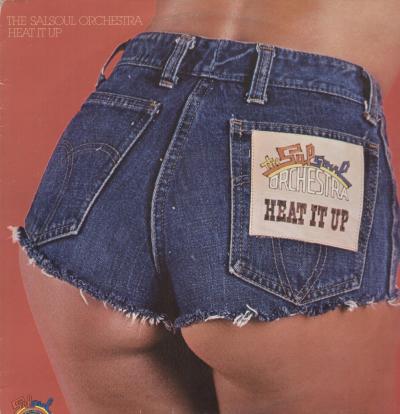
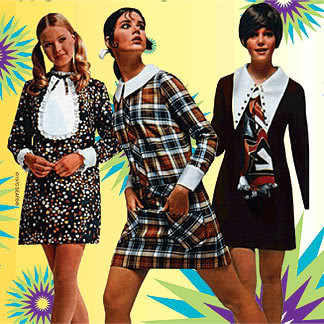
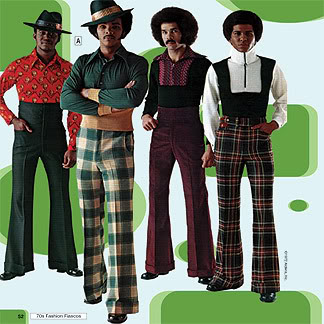
I came across Maureen Valdes Marsh’s 70s Fashion Fiascos one evening while doing research for That 70s Show, my tribute to New Yawk in the the decade that launched hip hop, punk, disco, and graffiti to the world. By random chance I knew the publisher, who introduced me to Maureen. Our connection was instantaneous, and since then I have enjoyed her brilliance, wit, and aesthetic sensibility. She wrote this essay on 70s fashion for me, and for the first time I am publishing it in full, along with a selection of images from her book, as well some album covers that illustrate her point.

.

.

70s Fashion Fiascos
By Maureen Valdes Marsh

.

Like a slow turning storm, it spread further and further out from the hub of urbanity until slowly—carefully—it rolled under the crack of suburbia’s front door. Like smoke, like mist, it couldn’t help but leave its fingerprints on everything it touched.  “I am here,” fashion whispered. “I am here.”

.

In between the free love of Woodstock ‘69 and the 1980 death of John Lennon lay a decade that would come to be remembered not only by its historical events—the shootings at Kent State, the end of the Vietnam War, the resignation of a president—but also for its pop culture.

.

1970s pop culture wasn’t simply about the excesses of Studio 54 or the squeaky-clean images emanating from the Donny and Marie TV show. The true pop culture of America lay in the day-to-day world of suburbia. As suburbanites, we showed our tender, compassionate side by how we tended and pampered our Pet Rocks. We showed our tolerant side by the patience we exhibited while waiting in endless gas lines. We showed our exuberant nature by the fervor with which we Bumped and Hustled on the disco floor. But perhaps the biggest and most lasting slice of 70s pop culture was in the clothes we wore.

.

Image from 70s Fashion Fiascos

.

Free from the constraints of the 1950s and peppered with the new found spirit of the 1960s, fashion in the 1970s took on a life all its own. Flamboyancy was no longer reserved for the young, rich, or famous. Flamboyant urbanity took a short ride over to suburbia’s neighborhood where it was welcomed with open arms.

.

When you look at the lack of choices women faced in the early 1970s, it’s no wonder they became angry enough to burn their bras in protest. It seems in hindsight, however, that they were burning the wrong garment. Even though bra burning was a symbolic act of women’s liberation, was it really the brassiere that was stifling women in the fashion sense? Or was it the overwhelming, in-your-face choices the fashion industry was rapidly throwing at them that made women strike the first match? There was the mini skirt, the midi skirt, and the maxi skirt. Comical circus-tent palazzo pants, sideshow pantsuits, and who can forget clunky, funky, and chunky—more commonly referred to as platform shoes.

.

.

After years of being regulated to the same look, the same uniform Donna Reed-style apparel, the same rules of acceptable/unacceptable dress norms, women were now being overwhelmed by the choices laid out for them. It’s something that we can’t comprehend today. We are used to a society where individuality is the norm, freedom of choice the rule. But for a woman entering the 1970s, freedom of fashion choice created a kind of culture shock. It was like being a kid set loose in a candy store: At first you can’t get enough; everything tastes sweet and delicious. But sooner than you’d imagine, your stomach (and your wallet) start to ache until at last you scream, “No more, please!”

.

Image from 70s Fashion Fiascos

.

In the meantime, it was no different for the male of the species. They too were under a barrage of rapid fire fashion bullets. The first rounds out of the chamber were, fortunately, blanks such as the uninspiring “Unsuit”— take one men’s suit jacket, remove the sleeves, scoop the front, slap a hip belt around it and voilà!, the Unsuit. The hot and lethal hits came in the form of plaids intense enough to be seen from the Concorde and platform shoes high enough to garner the American Medical Association’s official disapproval. But none left a lasting impression quite as strong as the posthumously awarded ‘king of the ‘70s’—the leisure suit.

.

Once hailed by top designers John Weitz and Calvin Klein as a garment with staying power, the leisure suit was ostracized from the kingdom of en vogue before the 1970s ever came to an end. Just as it had swiftly risen to the top of fashion, it fell into the leagues of comic relief twice as fast.  Today we laugh at the cheesy styles, feminine colors, and garish plaids. But what we seem to have forgotten is that the leisure suit did more than just provide us with years of laughs. The leisure suit helped men open themselves up to new ideas in clothing. It allowed them to experiment outside of the style box they’d been locked in for too many years. If the 1970s had passed without the leisure suit, “business casual” for men might never have developed as soon as it did. The leisure suit may have been a fashion catastrophe, but it laid the groundwork for men to strut their fashion stuff for decades to come.

.

.

As the decade came to a close, the fashions we now so closely associate with the era began to lose their staying power. Polyester garments were cast aside for a return to natural fibers. Women set aside their Day-Glo jumpsuits in exchange for tailored suits. Men replaced their loud, garish, wild-print shirts with muted earth tones and subtle patterns. Sky-high platform shoes were brought back down to earth in the form of comfortable flats. And all those millions of polyester leisure suits? Well, they were shuttled off to the Salvation Army, to await a time when, thirty years later, a new generation would rediscover disco, funk, and That 70s Show.

.

I LOVE CHARO

Don’t Stop, Get It, Get It

Categories: 1970s, Art, Fashion, Photography

Viva Skate: Cuba Libre Bebe

Posted on April 20, 2010

American foreign policy in action

American foreign policy in action


Chris Nieratko let me know about Viva Skate, his 2009 excursion to Cuba, organized to provide children with skateboards. The endless U.S. embargo does more than cripple the island’s economy; it also punishes generations who have nothing whatsoever to do with the politics of their fathers and their grandfathers. These punitive measures are more than financial; they are a kind of psychological warfare that reveals the true intent of our foreign policy. And to that end, we are fortunate that there are Americans like Nieratko who take a stand against the ridiculous injustice that continues to be a plague to so many.


In the video, you state that you are not political, but from my perspective, what you did was taking a stand against two governments in the name of bettering the lives of children. What was the inspiration to this trip? What was the role you played, and how easy—or difficult—was it to make this happen ?


Chris Nieratko: My friends that own and operate the Skatepark of Tampa started a program called Boards For Bros to give skateboards away to underprivileged kids in the Tampa Area. They’ve been doing it for years and I’ve always loved the idea. Skateboarding has saved many lives. When I was young it wasn’t looked at as lucrative career it was generally escapism for kids from broken homes.


Two years ago my friend Augie from Aculpulco Gold Clothing sent me a documentary called The Cuban Skate Crisis which showed how bad the skaters in Havana, Cuba have it in general but also specifically in terms of getting skateboard products. One kid in the video cried when his board broke because he didn’t know when he’d get another. He tried to staple, nail and glue the board back together.


After seeing that video I hit up my friends at Skatepark of Tampa and said we needed to get the band back together, that we were taking the Board For Bros program on the road.


Overall I think the entire thing was rather easy but that was because we had a good friend, filmmaker Tomas Crowder, learn us what we were up against and how to navigate past it. The hardest part was waiting for a good man to take the presidential office again here in America. We hadn’t seen one in so long that we all almost forgot what they look and sound like. And i was too afraid the last regime would put us in jail for doing a good deed.


I was really struck by the way in which the Cuban people persevere. Despite having the world turn it’s back on them, and having their own government monitor their moves, they have adapted to such adversity with spirit and heart. How do you think this compares to the world where we live and have everything at our disposal? How much do we take for granted, and what is our responsibility to give back?


CN: My life is forever changed by this trip. After returning to the States I began emptying out my garage, my attic, my life of anything unnecessary. I learned from the Cubans that material things isn’t what makes you happy. They have very little there and yet they are much happier than most people I know in America. And they are very quick to help their fellow man and share what little they have. Here citizens don’t want to even consider giving our poor health care or means to eat for fear of what the cost to ourselves would be. It’s really sad how little people in America regard their the next man. The world shakes in Haiti and for two weeks the country postures like it gives a shit and then it is quickly forgotten. What about all the people that are F’d in the United States every day of every year? Should we wait for a Hurricane or earthquake before helping them?


You learned you were being watched at the hotel; then the military arrived at the demonstration as a show of force. How did you feel about this involvement of the government in daily life, and how did it impact your understanding of the Cuban experience?


CN: I honestly had a hard time wrapping my head around the constant military presence. We are free men in America, allowed to do as we wish. We do not live in fear of our police or military and now that Bush and Cheney are out of office we no longer have to fear our government. I’d say that sense of dread from the people as they spoke with us, always looking over their shoulders for police, scared to be arrested for conversing with Americans was the only real disappointment on the trip. I don’t advocate anyone having to live their life in fear.


I love the scene where the kid kisses the board he was given. What response did you see among the children at the event?


CN: There was not a sad face amongst the skaters that day we gave away the skateboards. All in all everyone got a skateboard or a pair of Vans or eS Sneakers or both or more. Everyone was stoked but I can’t stress it enough; as elated as those kids were, the crew of people I went to Havana with were a million times more psyched. Those kids touched our hearts in a way it will never be touched again. Their reactions and their thanks were so genuine that a year later I still get giddy thinking about it.


Has being a father changed your perspective in the way you relate to children?


CN: My wife went to Havana with us. She was 5 months pregnant. I don’t think that being a father has changed my perspective on children; I’ve always had a good understanding and love of kids but I would say that my experience with the children in Cuba made me a better father. My wife and I learned a very valuable life lesson down there and that is children need not smothered with toys or gifts to have a happy existence, they need only the basic necessities and to be smothered with love. My son is only 7 months old but he has very few toys. It will remain that way his entire life and we will teach him one day about those kids in Cuba and what matters most in life.


Any shout outs you want to give for support of this project?


CN: Honestly, I am very proud of my skateboard community for getting behind that Cuba trip. Nearly every brand i contacted sent product to give away. Main sponsors were Red Bull, eS Footwear, Vans, Skatepark of Tampa, Vice & The Skateboard Mag but the laundry list of skate companies that helped out is enormous. They all know who they are and I thank them again.

Check the Viva Skate Video Here
www.chrisnieratko.com

Categories: Art, Photography

Ellen Jong: “Did They Think I Was Dangerous?”

Posted on April 15, 2010

Photograph © Ellen Jong

 .

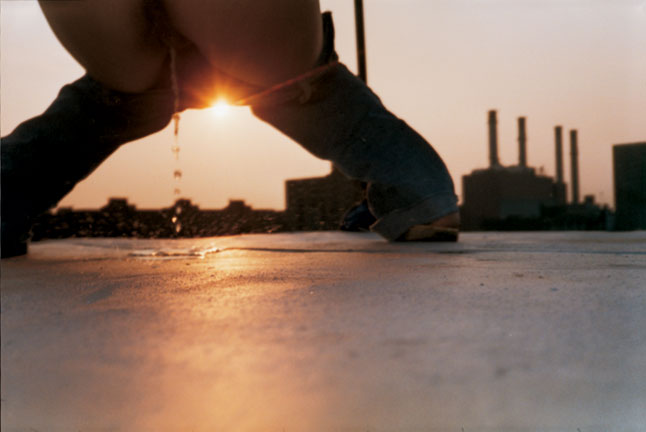
I’ve always had bit of penis envy, but only when it comes to peeing in public. I’ve admired how men could just whip it out and go with no hassle—unlike us ladies who have to find somewhere discreet to pee, and make sure we don’t splash our shoes. So, needless to say, when I met Ellen Jong, who has been taking self-portraits for the past ten years while pissing wherever the damn well hell she wants, I was fully in awe. Jong has shamelessly leveled the playing field, proving women can do anything guys can do—and not ruin their shoes.

 .

Miss Rosen: What is your favorite part of taking photos of yourself peeing in public?

 .

Ellen Jong: What is the most incredible is that these photos bring a smile to everyone’s face because everyone’s got their own story, both men and women.  The smile seems not to be a response to my photos but a smile at themselves while remembering their own stories, which always makes me so happy.  Peeing is harmless.  There are some things that you just can’t take too seriously about yourself.

.

MR: I’ve noticed a range of reactions to the pictures, all of which are very strong. It’s not exactly a subject that goes unnoticed. As the photographer and subject, how do you feel about exposing yourself—to people’s opinions be it positive or negative?

.

EJ: I take many of the responses very personally. While creating the book, I was on the verge of insanity grasping on to the little bit of self I could hold onto. I’ve exposed myself a great deal and pushed even more to reveal what is in the book’s text. It’s difficult to remain distant from criticism when I feel so vulnerable. But, I prefer to hear all the reactions, good and bad. I can’t get the taste of sweet without the bitter.

.

MR: My mother got a little uptight when I told her about the book, and my 91-year-old grandfather was in shock. And I’m just the publisher! How does your family feel about your work?

 .

EJ: My mom and dad are my biggest fans. Though my parents were always really worried about me, when these photos became an expressive body of work and an identifiable thing that I can own, my parents could do nothing but support me. During my first show at Vice, we got shut down by the police because we’d blocked traffic on the street. There were people everywhere. I can even remember a drum circle. It was a crazy party. My parents sat at the window of a nearby restaurant the entire time, watching the mayhem with smiles on their faces. My boyfriend at the time got arrested that night for failure to control the crowd and my mom giggled.

.

Photograph © Ellen Jong

.

MR: Speaking of arrests, I understand you have quite a story.

 .

EJ: While I was living in Miami, I came up to New York for a photo shoot in Times Square. While location scouting, I came across a storefront with red, white, and blue neon verticals in the window. It was 9:00 p.m. on a weekday and there was sidewalk traffic but I figured I’d seen way more crazy things on the street than someone taking a pee, especially in the Times Square area. I propped the camera on the sidewalk and set the self-timer while unbuttoning my pants. I ran to position and peed so fast that by the time I picked up the camera, I was dry and buttoned up. Then a pair of cops came out of nowhere with jaws dropped, asking, “Did you just do what we think you did?”

 .

I couldn’t tell if they were more shocked from witnessing the actual urination or by my blatancy. Or were they shocked to see me, a face of innocence, behaving so provocatively?  I explained my work while talking into the eyes of the female cop, telling her that my photos are not meant to be offensive: “I pee in cityscapes as if in nature, like we were once able to do as children…” I don’t remember exactly what I said, but she was willing to let me go. But then her supervisor rolled by and told her to write me up. Instead of giving me a ticket, she gave me a summons thinking she was giving me a break.

 .

A couple of years later, after I had moved to New York, I was at a summer festival at the East River Park with an open bottle of tequila. The cops came up, took my license, and discovered I had a warrant for arrest because I had ignored the summons. They handcuffed me and escorted me a patrol car.  Mind you, it was summer. I was wearing a mini skirt, a tank top (no bra), and flip-flops. I must have looked 12 if not younger.  And, since the offense doesn’t come up in their system, they were expecting the worst. Did they think I was dangerous?

.

I went thru the system; I sat in the cell at the police station while waiting for my identity verification to get back from Albany. It hit midnight and I was taken to Central Booking for another round of fingerprints, mug shots, and paperwork, with all the other men and women arrested that evening. They finally took off the handcuffs and put me into a cell with four other chicks sleeping on floor mats. I took a bench.

.

The first thing in the morning, I was given a lawyer—she was awesome. When I told her that I was arrested for public urination, she shut her folder and said, “Well no woman should be arrested for that,” then disappeared into the courtroom. When we got in front of the judge, I was surprised to find that no one recognized the offense code. Once revealed there was a chuckle amongst them; even the judge laughed. I had to swear to behave for the next six months. Then my lawyer said I was free to go and directed me to the wooden gate held shut by a small hook latch. I just walked out. I can still hear the giggling in the courtroom. It has been six months and my record should now be cleared.

.

Photograph © Ellen Jong

 .

MR: It’s a little shocking to think this is how our law enforcement system works.

 .

EJ: It’s easy to forget that peeing in public is illegal since it’s something everyone does; when you gotta go, you just gotta go. I might’ve taken it a little far considering some of the places I’ve peed (the phone booth is pretty crass). But I hope the combination of those crass moments and the serenity of the landscapes in nature create a bigger picture. I express my wild and quiet contemplative sides through these pictures. They’re my insides pouring itself onto film.

 .

www.ellenjong.com

Categories: Art, Books, Manhattan, Photography, Women

Boogie: Art Coup

Posted on April 13, 2010

In the summer of 2004, I was out in San Francisco and stumbled upon a little black-and-white photography magazine called Hamburger Eyes. I flipped through the mag and came to a full stop at a photo essay called Mean Streets. Ice-cold images of life in the projects of New York City popped off the page as I stood, slack-jawed, in awe. I looked for the name of the photographer: Boogie. “Who is this lil Puerto Rican hardrock with a camera?” I wondered to myself.

.

A year later I would find out. Boogie sent me an email asking me if I would be interested in publishing his first monograph, It’s All Good. He sent me photos, photos, and more photos. I fell off my chair a couple of times. When I got back up, I got up on it. Over the next three years, I published both It’s All Good and Belgrade Belongs to Me under my imprint, Miss Rosen Editions.

.

Funny thing is, no matter how much I learned, I always had more questions. I discovered this interview we did a couple of years back. It still gives me pleasure to read his words and contemplate his work. Boogie’s transformation in the time I have known him is tremendous, and I am grateful for the opportunity we shared to create these two monographs.

.

Photograph © Boogie

.

Miss Rosen: I’d like to begin with family background, about your grandfather and your father’s work, and how your exposure to their work may have influenced you, not necessarily as an artist but as a young man.

.

Boogie: My dad was an icon painter and amateur photographer and my grandfather was too. My grandfather always had the best cameras—Leicas, Contax. He got arrested after the second World War for taking photos of some military facility and then the Communists put him in jail. He thought they were going to kill him so he wrote his last will and testament from prison. My aunt still has it.

.

I had some photos of when the Americans bombed Belgrade in 1945, when the Germans were withdrawing. Then the Communists came and it was worse than the Nazi occupation. Yugoslavia was a totally artificial state. You can’t put together people who don’t want to be together in the same state. The second World War pretty much never ended over there; we’re just waiting for the opportunity to kill each other again. We, Serbs, feel like a great deal of injustice has been done to us. We lost more than 50% of our male population in the first World War, then we lost 2.5 million in the second World War (and we were on the side of the Allies), then the Americans bombed us in the 90s.

.

Photograph © Boogie

.

Living under Milosevic was like living in a mental institution. It was apocalyptic, especially during the biggest crisis in 1993. Pensions and salaries were like three to five United States dollars. People, especially the old and retired, were literally dying of hunger, or committing suicide rather than starve to death. The streets were empty. There was a shortage of gasoline, so there were very few cars on the street. And then, in the middle of the night, you would see a police truck cruising slowly. There were protests against Milosevic every day. In the beginning they were peaceful, so I didn’t go. I don’t believe in peaceful, passive resistance. It’s either grab the gun and go to the woods or sit at home. But then they turned violent. The police were very brutal, beating protesters mercilessly. And that’s when I started to go out and shoot [photographs]. Milosevic wasn’t sure cops from Belgrade would be tough enough—they might not want to beat on their neighbors. So cops were brought from other parts of Serbia, huge cops with mustaches, in riot gear. Shit, I ran from them a few times. Scary.

.

Photograph © Boogie

.

Miss Rosen: Tell me about your work as a young photographer picking up the camera, training yourself—and then going after Nazis as a subject!

.

Boogie: I did a lot of photography back in Serbia. I used to freelance for magazines and newspapers, and I always shoot when I go there to visit. I did a series on Nazi skinheads recently. Belgrade is very cinematic, in a depressing way. A friend of mine is a supporter of a football club; one group of supporters is Nazi skinheads and he knew them so he introduced me to them. The whole movement is on the rise in Europe, especially in Eastern Europe; it came with economic crisis. It’s pretty normal when things go down, you blame someone else.

.

It was like a dream come true, when you shoot stuff no one else can. For awhile that was the point of me being a photographer. It’s not anymore, but when you first start out and you carry a big camera around it’s cool, chicks like me now. You go through phases, and you want people to know you’re a photographer. Then you go over it and the only thing that matters is the final result, the photo, your equipment looks like shit and you’re totally low-key.

.

In the beginning I would find inspiration in shooting rough stuff in things no one could get access to, but now I don’t really care about that. I don’t think that’s what makes a good shot.

.

.

Miss Rosen: Moving in that vein I’d like to discuss the war, how it affected the people you knew, and the world you lived in?

.

Boogie: I am what Belgrade used to be 20 years ago, in spirit. Belgrade had a really unique cosmopolitan spirit 20 years ago and it all got fucked up during the war. Young people left the country, we got a million refugees and that sprit of 86-89 is gone. A new one will somehow evolve and come to existence, but right now it’s just a mix of what’s left from the original spirit and what refugees brought with them.

.

We had really great creative energy, bands that didn’t copy anything from anyone. We had something original, it was ours. The underground clubs in Belgrade were the second best in Europe in NME. I was 17, 18, 19.

.

I went into the army when I was 19. You have to go. Of course, it was a waste of time being in the stupid army. The best part is actually shooting and you don’t do that often; and even if you do you have to clean your gun after so it sucks. I was in Air Defense; you don’t fly, you try to shoot them down. It’s antiaircraft guns. I got out in 1990.

.

The conflict started in 1991 and it went through 1998.

.

I started taking photos of the protests in 1993. It was weird—miserable poverty, no money, no gas, nothing. I wasn’t a photographer then. I was a kid with a camera and my photos from then pretty much suck. I think I got my first good shot in 1996. The first good shots I got were during 1996.

.

Photograph © Boogie

.

Miss Rosen: How did you come to live in the U.S.?

.

Boogie: I was just drinking one night with friends at my place and we all applied for the green card lottery and I was the one who won. I never intended to come, and then I won, and of course I had to go because I won. 1998.

.

I thought I spoke English. It was a huge shock. It was like your general opinion about the US is that money is all around, money is all around, land created by immigrants, they’ll love us—can’t be further from the truth. You start from below zero. I started working for some Serbian guy duplicating and delivering videotapes for $300 a week. I was living in a studio in Queens—it was nice, it wasn’t a hellhole, but everything else was grim. My life sucked.

.

The first time I went back was after two and a half years. That was like, it was very hard to come back to the US after spending a few weeks home. At that time Belgrade was home. It took me five years to decide if I am here or if I am still there, but you can’t do anything until you really decide this is your home or back there is your home. Somehow, you put things into place and then you can move on.

.

I wanted to be a photographer. I thought I was very good but I wasn’t.

.

I got a job in a hospital, Beth Israel, fixing medical equipment walking around with a white coat and screwdriver and pliers. $17.50 per hour, overtime 50% more. I always had my camera with me. I would leave home early, shoot before work, shoot after work, rush home and develop. I had a darkroom in my bathroom. The whole hospital thing started driving me crazy and I decided I would learn web design and become a web designer. So I gave myself two months and I learned web design, Flash, and became a web designer; and that was okay because I was making twice as much money.

.

.

Miss Rosen: I remember, after we published It’s All Good, I found a submission you sent to someone years ago at powerHouse. It never got passed along to me—which, in the end, seems to have worked out any way, but it must have been tough to have tried to get down in New York.

.

Boogie: It’s just impossible to get into the photo world. You send your shit around and no one wants you and there is no feedback. You don’t know if you are talented, you doubt yourself. I got depressed and I stopped taking photographs in the year 2000 for two years. Not a single shot, not even September 11.

.

I was doing some web design and I was bored one afternoon and made a website with 20 of my photos. I was searching for some lists of expired domain names and searching by “art,” and I found artcoup.com, and I bought it. It’s very random. I made this little website with just 20 photos and I sent the link around and I got like 20,000 visitors in a few weeks and feedback was amazing and I was like, oh, maybe I should start taking pictures again. So I did.

.

I started shooting again and sending my stuff around and of course same story. No one wants you no one cares, so I was like, I won’t send anything to anyone anymore and it was like that for a few years. I wasn’t really pushing. I met Tim Barber through Vice.

.

Miss Rosen: Yea! It was thanks to Tim that you came directly to me—I had seen your work and was interested, but with everything going on in this office I never seem to have the time to track photographers down. One of the things I remember our discussing in the beginning was your intention with this project—why were you doing it? You weren’t entirely sure, so I asked the obvious question: Are you a moralist?

.

Photograph © Boogie

.

Boogie: Am I a moralist? Hmm, I don’t know. The whole story about photographers doing what they do because they want to change the world, expose harsh reality of wars, starvation, violence—is aaaaaagh, crap. They (me too, I guess) do what they do because it gives them thrills. They become addicted to the adrenalin rush, to the world not everyone is allowed to see. You go to the crackhouse, and there is a chance that something bad will happen to you—then everything turns out to be OK. You get out of there, take a deep breath, and trust me, it’s your best breath of air, ever. I don’t judge people I am photographing. They made some wrong choices in life, and they were too weak to keep fighting, they just gave up. So I guess we’re not gonna change the world, but rather show it as is, fucked up to the bone.

.

As for the gangsters and drug addicts—I guess I’m always after extremes; and, of course, the whole experience of dealing with people like that is like being in the movie. It all started one day when I went to Bed-Stuy. I was walking around when I saw a homeless group in an abandoned parking lot. I approached them (they either thought I was a cop or that I’m crazy or something) and asked to take pictures. They were all like, No, no, no. But one girl allowed me to take pictures of her. I bought her a beer, we started talking, I went there again the next day, and so on and so on. We became friends. Then one day she asked me if I wanted to take pictures of her and her friend smoking crack.

.

I think photography is in a way similar to acting. You need to get into your character’s head, you have to become him in order to fully understand him. I’m a white guy, but white guy with an accent. I don’t sound like anyone gang guys hate, and I don’t really look like WASPy American guy. Also, I feel OK when guns are around (I don’t want them pointed at me, but what the fuck). Hey, I’m Serb after all!

.

Photograph © Boogie

http://boogiephoto.blogspot.com/

www.artcoup.com

Categories: Art, Books, Brooklyn, Photography

Delphine Fawundu-Buford: Nina Simone/Four Women

Posted on April 6, 2010

I first met Delphine Fawundu-Buford a few years ago; damn I don’t even remember how we met, she’s just one of those sparkling magical people who seems to be in your life for the longest, kinda like family. We had been talking about publishing some of her 90s Hip Hop work: Lauryn Hill on the stoop, so innocent you might not even spot her in a crew of round the way girls hangin’ out; Smif N Wessun acting out, kinda crazy bringin me back to Bucktown; and then all these amazing shots taken of storefronts, of a place and a time that’s that old New Yawk that natives reminisce about when they remember how this city used to be…  Let’s just say, Delphine’s got the photo album for a period in Hip Hop history that few people are checking for, but all of us need to be.

.

Miss Fawundu-Buford just reached out to me, to let me know about her exhibition of new work at a group show curated by the amazing Deborah Willis called Girl Talk, which is up at Renaissance Fine Art in Harlem through Sunday April 11. The show closes on April 11 with an artist talk at 2pm. In advance of then, I’m going to let Delphine speak about her pieces, an interpretation of Nina Simone’s Four Women.

.

© Delphine Fawundu-Buford

.

Nina Simone’s Four Women, An Interpretation
Four Self-Portraits by Delphine Fawundu-Buford

.

With this series I created a 2010 interpretation of Nina Simone’s Four Women.

.

Nina Simone’s Four Women speaks to the legacy of slavery and it’s transformation into four archetypes of black women.

.

Nina sings… My skin is black./My arms are long./My hair is wooly./My back is strong./Strong enough to take the pain./Inflicted again and again./What do they call me? My name is Aunt Sara.

.

In my depiction, Aunt Sara is the “strong” black woman.  This strength is reflected mainly in her character and level of endurance.  Sometimes her strength is great as she is a vibrant, creative, hard-working woman who gets the job done.  However at times, she finds this strength to endure the societal pain that has been “inflicted again and again.”  The words on Aunt Sara’s back reflect these conflicting strengths.

.

© Delphine Fawundu-Buford

.

Nina sings…My skin is yellow./ My hair is long/ Between two worlds./ I do belong./ My father was rich and white./ He forced my mother late one night./What do they call me? My name is Safronia.

.

In this series Safronia is often faced with the question: What are you?  This is due to her light skin, light eyes and hair texture.  In a race and image driven society we are often comfortable when we can quickly place a person within some racial or ethnic category.  Safronia is an innocent spirit conceived into a world that refuses to holistically deal with the horrors of her ancestral past.  Safronia’s ambiguous image, and conflicting ancestry leaves her wondering: Who am I?

.

© Delphine Fawundu-Buford

.

Nina sings… My skin is tan./My hair is fine/my hips invite you../My mouth like wine./Whose little girl am I?/Anyone who has money to buy/What do they call me? My name is Sweet Thing.

.

In this series, Sweet Thing represents a hybrid between the racially and sexually exploited, Sara Baartman a.k.a “Venus Hottentot” of South Africa, and the scantly dressed hyper sexualized black woman or “Vixen” that has become iconic in urban culture.   Here Sweet Thing is tired, “pimped out” and confused.  Her mannequin with an attitude posture symbolize the little power that Sara Baartman must have had to not totally mentally give in to the harsh experience of being forced to tour Europe as onlookers leisurely examined her “abnormally” huge derrière.   Sweet Thing like the “Vixen” is faceless.   In our society, her image represents the manufacturing of beauty:  breast and buttock implants, hair weaves, dieting products, and a host of other capitalistically driven cosmetic adjustments.

.

© Delphine Fawundu-Buford

.

Nina sings… My skin is brown./My manner is tough./I’ll kill the first mother I see./My life has to been rough./ I’m awfully bitter these days./Because my parents were slaves./What do they call me? My name is PEACHES!

.

Although Ms. Simone’s Peaches may have been a revolutionary, someone ready to fight for what they believe in regardless of their past, I chose to depict Peaches as a young gang member.  Peaches was born to parents who are both slaves to a system which perpetuates poverty, lack of self-education, consumerism, racism, and sexism.  Deep down she knows that she comes from a significantly rich ancestry, but some how something went wrong.  She rebels against a society that does not accept her, educational institutions that belittle her, corporations that control her, and a prison industrial complex that welcomes her.   Misguided in her form of retaliation, she fights hardest against and even kills the ones closest to her.  “My name is PEACHES!” She cries for help everyday.  At what time do we listen?

.

www.delphinefawundu.com
www.theRFAgallery.com

Categories: 1990s, Art, Books, Music, Photography, Women

Jiani Jenny Chen Shot Rock & Roll’s Hottest Photogs

Posted on November 5, 2009

maripol2

va va voooom! miss MARIPOL is THE BOMB. the sexy kind.

kwamebrathwaite

i must have taken more then ten photos of KWAME BRATHWAITE, but he was a sweetheart about it

marciaresnick

MARCIA RESNICK was totally dressed to ROCK, i stalked her a little to get this pic

masayoshisukita

not only is MASAYOSHI SUKITA awesome for coming all the way from Japan, he was a perfect gentleman, with a chic Asian posse in tow.. my camera and i timidly bowed a couple of times in thanks

godlis

GODLIS is the kind of photographer who’d have amazing stories about Rock and Roll in NYC back in the 80s- come hear him talk with Gail Buckland on November 10th .

henrydiltz

who better to stand with miss Tina than the photographer himself, HENRY DILTZ

elainemayes

oops i accidentally disturbed ELAINE MAYES while she was doing her own documenting of the show to get her photograph hehe

lauralevine3

i adore LAURA LEVINE’S work, so much that i blocked out the dude’s photograph below hers hahaha (jk)

bobseidemann

BOB SEIDEMANN is my favorite of the night. he coached me for like 10 minutes in taking this photo, all the while making me giggle like an Asian schoolgirl, he was SO FUNNY!

edwardcolver copy

EDWARD COLVER’S photograph is sooo intense, they made a shirt out of it- in the Brooklyn Museum ROCK SHOP!

chrisstein.johmholmstrom

CHRIS STEIN and JOHN HOLMSTROM were the perfect duo of ROCK & ROLL

www.simplychen.com

www.missrosen.us

Categories: Art, Brooklyn, Exhibitions, Music, Photography

Nat Finkelstein Shot the Velvet Underground

Posted on October 30, 2009

copyright Nat Finkelstein

copyright Nat Finkelstein

Who Shot Rock & Roll
A Photographic History, 1955–Present

By Gail Buckland

,

BEHIND THE SCENES WITH

ELIZABETH MURRAY FINKELSTEIN

.

Nat Finkelstein, American photographer and photojournalist, was born in Brooklyn in 1933. Starting off as a student of the legendary art director of Harper’s Bazaar, Alexey Brodovitch, Finkelstein worked for agencies like The Black Star and PIX. However Finkelstein is probably best known for his work with Andy Warhol, as his ‘unofficial’ in- house photographer, which is nowadays recognized as some of the best photographic work of the 20th century. Since then, Finkelstein has exhibited his work worldwide; among many other locations, his photographs are in the collection of the Museum of Modern Art, The Metropolitan Museum of Art, The Brooklyn Museum of Art, and The Andy Warhol Foundation, New York; The Victoria and Albert Museum, London; and the Centre Georges Pompidou, Paris. Nat Finkelstein passed away in early October 2009 in his home in Upstate New York. He was 76 years old.

.

Elizabeth Murray Finkelstein discusses her husband’s work, Velvet Underground and Friends, 1966, selected for publication in Who Shot Rock & Roll by Gail Buckland (Knopf, October 2009, $40).

 .

I can imagine you must have mixed emotions, with Nat having recently passed, and the responsibility of running his archive falling to you just as Who Shot Rock & Roll launches. How do you feel about being the spokesperson on behalf of Nat and his work?

 .

Elizabeth Murray Finkelstein: Nat and I had a pact through our marriage: I would protect both his art and his legacy. Because he was significantly older than me—he died at 76, I’m 35—we knew the reality of the situation. I would live to carry on his work, a responsibility I take very seriously.

 .

When I met Nat, he was living in a horrible situation, in a gross apartment under the BQE, depressed and with few prospects for the future. I looked around through this squalid place and there was his artwork. I recognized genius and asked him, “You did all THIS?” And Nat answered, “Yeah, but nobody cares.” He broke my heart. With that, I made it our mission to get his life together and to re-establish him as an ARTIST. I think we did OK.

.

This project really brings my relationship to Nat full circle, as it was through his work at The Factory in the mid 60s that we first connected. Although neither you nor I were there for it, Nat sure as hell was, and though he is gone, his work continues to live on. Can you describe for us how Nat felt about photographing the Factory and its denizens?

 .

Ironically, perhaps, Nat and Andy Warhol had a common background. Both were children of the Depression, of working class families, who found their voice through their vision.  Nat respected Andy – I think Nat knew where Andy was coming from, as an artist and maybe also as a person. Nat was a well-established photojournalist in the 1960s, and Andy knew Nat’s name through photo credits in magazines.    When they met, both probably recognized the mutual benefit. I’ve reminded a few haters that it was Andy who wanted Nat at the Factory. And Nat knew a good story when he saw one.

 .

There were qualities of the Factory that Nat really loved:  brilliant art, beautiful women, and the Velvet Underground. These are the subjects on which he focused his camera. But he believed the Factory ultimately represented the soft underbelly of the American underground. In 1965, Nat was also photographing, and organizing anti-Vietnam War and civil rights activity—ugly scenes of young and old violently oppressed by the powers that were. In contrast, Nat said that political struggle was of no concern at the silver Factory, where celebrity for its own sake was a common goal. He derisively called the arch-scenesters “the Satellites”—those who existed only to revolve around a bigger star.

 .

Nat described the Velvet Underground as “the psychopath’s Rolling Stones.” Please elaborate…

 .

The Psychopath’s Rolling Stones… Ha! In 1966, Nat used that phrase in his book proposal for the Andy Warhol Index. He was a huge fan of the Rolling Stones, so he wasn’t being derogatory or demeaning—he was being pithy. However, Nat told me that Lou Reed was totally offended when he read this. Obviously, the VU were doing their own thing, but Lou thought the comparison to the Stones diminished their uniqueness. And so, as per Nat, Lou Reed responded, “The three worst people in the world are Nat Finkelstein and two speed dealers.” Touché! Nat claimed Lou never forgave him for the “psychopath” quote. That’s sad, because Nat truly cared for the VU as people, as individuals. He was proud of their accomplishments. But he felt he had been iced out—dismissed or betrayed. In the last years of Nat’s life, Eden Cale, daughter of John, became our very close friend. Nat and John reconnected through Eden, which meant a lot to Nat.

 .

Critic Ian Johnston describes Nat’s photo of the Velvet Underground as “…among the best ever portraits of a rock band, exuding sleaze, menace, and decadent glamour.” What are your thoughts on this image, and how well it has stood the test of time?

 .

Nat has maybe 1,000 photographs of the VU—everything from group shots, to performances, to candid portraits of the individuals. As a photographic study of a rock & roll band—a body of work—it may be unparalleled in scope.

 .

The image in Who Shot Rock & Roll was from a group portrait session; we have a few contact sheets from this shoot, which we referred to as “VU with Vox.” As for the far-reaching influence of these photos, I’m reminded of an email we got several years ago. A VU fan from England, I believe, wrote to ask if Nat had any photographs of the Vox speaker by itself. The fan wanted to know if a legend about the alteration of the Vox knobs was true, and if Nat had photographic evidence. Nat’s response was, “Do you want to buy a photograph?” To which the fan responded, “I just want to know if the story is true.”

 .

I was a fan of the Velvet Underground long before I knew Nat Finkelstein. I didn’t know Nat’s name. I certainly didn’t know he would be my husband—but I knew his pictures. Nat’s photographs are the visual component to the VU story. Despite the arguments and estrangements, Nat and the VU are inextricably linked in history. As long as the Velvet Underground is relevant, which I imagine is forever, Nat’s photographs will remain relevant, too. Great art is timeless.

Categories: 1960s, Art, Books, Brooklyn, Exhibitions, Manhattan, Music, Photography

« Older entries    Newer entries »

Categories

Archives

Top Posts

  • Home
  • About
  • Marketing
  • Blog
  • Azucar! The Life of Celia Cruz Comes to Netflix in an Epic Series
  • Eli Reed: The Formative Years
  • Bill Ray: Watts 1966
  • Jonas Mekas: I Seem to Live: The New York Diaries 1950-1969, Volume 1
  • Mark Rothko: The Color Field Paintings
  • Imprint

Return to top

© Copyright 2004–2025

Duet Theme by The Theme Foundry