Miss Rosen
  • Home
  • About
  • Imprint
  • Writing
    • Books
    • Magazines
    • Websites
    • Interviews
  • Marketing
    • Publicity
    • Exhibitions & Events
    • Branding
  • Blog

Posts from the “Books” Category

(It Chooses You)

Posted on July 19, 2012

Photographer unknown

April 4, 2010

Dear Sara:

.

I’m glad you took the time to sit down and analyze your situation. You have had a hectic ten years but at the same time you have had a wonderful experience and will profit from it. It’s time to make a career change and I for one would like to see you take on the role of author.

.

With your talents, the most lucrative, productive and satisfying career would be to write novels. Start with one where you have a lot of experience. “He is a young free-lance photographer, affiliated with Magnum. He has obtained an assignment from your firm to do a photo shoot of Afghanistan by following the path of the previous Russian involvement there and why they failed. He has just  returned from there on September 10, 2001. He makes a date with you to give you a heads-up on some of the details and photos of the difficult terrain and hardships involved. You make a date to have lunch at Windows on the World at noon on Sept. 11, 2001.”

.

Take it from there and develop a  traumatic, compelling love story of these two young people.

.

As for myself I’m still hanging in there. I’m satisfied with my sons’ achievements and with my grandchildren. Each is special to me in their own way. It’s been a productive life. I feel fulfilled and ready for the final journey. I’m at peace with my journey through life.

.

And I Love You

Grandpa


Categories: Art, Books, Photography

Like Buried Treasure

Posted on July 9, 2012

Photographer Unknown

I feel greatness and it is here for me.
And perhaps one day I shall
articulate the ineffable.

.

There are things I see and I feel and I know.
Writing has chosen me.
And in that it has chosen me,
I feel the deepest humility.

.

I feel the flow of life and I hear the voice of truth.
I feel it in work and I feel
work is no longer a four letter word.
It is not money and it is not status
and it is not an addiction.
I no longer use it to avoid but to discover myself.

.

To write is to live honest and free
pure and simple and with integrity.

.

I wrote this piece and I am not ready for it.
It is so heavy and dense that it kind of intimidates me.
It makes me think, it’s not even mine.
It just is.

.

Like buried treasure.
I discovered it but I cannot own it.
It exists before and after and without me.

.

I am no one.

.

But I will say this.
Writing is my salvation.
Not just meditation.
Not just creation.
But a means to something greater.
God, even.

.

~Miss Rosen, 2012

Categories: Art, Books, Poetry

Martha Cooper: Tattoo Tokyo 1970

Posted on May 18, 2012

.

In 1970, photographer Martha Cooper spotted a man in a crowd. On his back was a Japanese tattoo, figures drawn in the style of a woodblock print. Entranced by this vision, Cooper followed him until he disappeared, and soon thereafter began questioning her friends about the subject. It was a touchy topic—it had been outlawed in 1872 and legalized again in 1948 and as the decades intervened, tattoos became symbols of the yakuza, the gangsters and the underworld of Japan. This is because the images of tattoos were seen in films, and is all too common, what is constructed for entertainment is taken as truth.

.

Fortunately, Cooper delved deeper, and discovered an ancient art, the art of the ornamental flesh that has traditionally defined members of the working class. As Cooper explains, “Tattooing properly is a difficult skill and therefore to get tattooed has always been expensive. A bad tattoo artist could kill you by pricking your skin to deeply with poisonous inks. A laborer who as a full upper body tattoo has to earn a lot of money to pay for it. Thus the most beautiful and extensive tattoos are symbols of wealth and prestige.” And it was with this basis for understanding that Cooper visited tattoo master Horibun I in Tokyo and documented his world.

.

Tattoo Tokyo 1970 (Dokument Press) is a beautifully produced volume of this work. Tall, slim, and elegant, the book is as much an objet d’art as the work itself. This volume features two brief essays by Cooper describing her study, the writing as rare as the images themselves for Cooper usually allows her photographs to speak for her. Cooper’s essays add insight and context to the work, providing us with a stage and a setting for the scenes about to unfold.

 .

As Cooper describes, “In the corner of the room say a young girl of about 18, who I assumed was Mr. Horibun’s daughter or assistant. She greeted me and we chatted, avoiding the subject of tattooing. Mrs. Horibun brought us tea and as we were sipping it, began making preparations. She moved aside the little table, rolled out a narrow mat and adjusted the overhead light. Mr. Horibun then walked into the room without ceremony and began to prepare the inks. To my surprise, I saw that the inks were nothing more than the usual ones used for calligraphy. As Mr. Horibun rubbed the ink stick in water on a stone, the young girl who had been sitting demurely beside me began to unbutton her blouse. I realized for the first time that she was the one to be tattooed but did my best to hide my amazement.”

 .

And it is this young girl who receives a striking piece outlined upon her back, a girl kneeling while contemplating a branch in her hands. Cooper carefully documents the work of Horibun I, and we see how the master uses flesh as canvas for a drawing that has as many layers of work as it does symbolic importance. In Cooper’s photographs we also see the human as canvas themselves, and can consider the dialectic between ideas which are usually quite distinct. Through the process of creation artist and the artwork are forever fused with the owner themselves—for the act of wearing a tattoo is as much about adornment as it is about expressing the inner self.

 .

This particular form of art is unlike any other, for it is permanent in the most temporal state, and just as the body does, it ages and changes over time. Tattoos last as long as life, and after this moment all that remains are the images themselves. The individually decorated body telling a story that is all their own, the style of design as distinctive as the face that wears it proudly. Cooper’s work for Tattoo Tokyo 1970 is a stunning document of a place and a time that brings together history and ritual, tradition and spectacle, expression and artifact in an eloquent volume.

 .

Categories: 1970s, Art, Books, Fashion, Japan, Photography

Tetsugo Hyakutake: Pathos

Posted on October 7, 2010

Photograph © Tetsugo Hyakutake

.

I first discovered Tetsugo Hyakutake’s photographs when curating the 2009 IPA Best of Show exhibition. His photographs of post-war industrial Japan were at once graphically arresting images of a landscape that was both familiar and alien, powerful and exhausting, brilliant and stressful. I am fortunate Tetsugo contacted me recently, to let me know about “Pathos”, an exhibition of the works at Alan Klotz Gallery, NY, now through October 30 as I had the chance to speak with him about his ideas about modern day Japan.

.

Please talk about your ideas of “Pathos and Irony” as they pertain to power post-war Japan. What has been gained and what has been lost during this radical period of industrial and economic growth?

.

The post-war Japanese nation believed that industrialization and economic growth was the only way to recovery from defeat, catch up with the West, and revive national confidence.  Despite the loss of human lives, destruction of more than 60 cities, and a lack of raw materials, Japan became the second largest economy in the world in less than 30 years after the war ended. However, in the early 1990s, rising stock and real estate prices following industrialization caused the economic bubble to burst and since then the Japanese economy ceased growing, which is known as “Lost Decade”. I think the collapse of the economy and the “Lost Decade” have left little room to reflect upon and contemplate what was post-war development and what it means to be uniquely Japanese. By looking back on history, I want to bring light to the present.

.

Although rapid economic growth was in a sense successful and made living standards rise materially, at the same time we sacrificed lot of things, such as beautiful landscapes, agriculture, human lives, and we also suffered from things such as air pollution and water contamination.

.

I focus on the ironic duality of beauty and dehumanization inherent in industrialization. “Pathos and Irony” lies between them, and while there is no visual evidence of human life, the industrial structures cannot be stripped of the sense of humanity that surrounds them. These opposing values epitomize the paradox of society after industrialization. Also I give a tribute to those who toiled to make it possible for Japan to become an economic superpower after World War II. I strive to depict this “pathos” as well as other emotional complexities that go hand in hand with the advancement of modern society.

.

Embedded in my images is also the investigation of “pathos” in relation to historical, social, and economic issues involving industrialization and urban development. By expressing feelings of isolation, loneliness, and emptiness that underlie this “development,” I seek to provoke the question of whether society is truly advancing through industrialization.

.

Photograph © Tetsugo Hyakutake

.

Why did you decide to focus on documenting the industrialization of Japan?

 .

From the 1970’s to 1990’s, my father had been involved in the Japanese car industry as a car designer. When I was twenty years old, he died from cancer caused mainly by overworking. When I see industrial buildings in Japan or even in other countries, it always reminds me of my father. I still remember how hard he was working during my childhood. Japan obtained strong economic power by the development of industrials, however personally I sacrificed my father’s life. I wanted to express my complicated emotions through my photography to monumentalize his life. That was the beginning of this project. Afterwards I began to focus on post-war development led by industrialization.

.

Photograph © Tetsugo Hyakutake

.

How do these images represent the aesthetic of contemporary Japanese culture, politics, and thought?

.

I think contemporary Japanese culture is based on cultural traditions, embracing western culture, individual interpretations, and industrialization. I am not sure how these images represent the aesthetic of “contemporary” Japanese culture. I attempt to connect historical, economic, and social issues of post-war Japan with personal experiences and the voices of my generation by showing the photographs of industrial and urban structures as a symbol of contemporary Japanese culture. By doing so I am trying to forge my Japanese identity, which is what means to be Japanese in post-war Japanese society.

.

My photographs visually depict how chaotically Japan was re-constructed after the war; in contrast they also show exquisiteness in the complex structures, and I think this duality of issues is one aspect of the aesthetic of contemporary Japanese culture.

.

Photograph © Tetsugo Hyakutake

.

What do you see as the relationship between the beauty and dehumanization of industrialized Japan?

.

There are dual issues of beauty and dehumanization in industrialization. In these photographs of industrial and urban structures, I emphasize its beauty by altering visual elements to accentuate the grief of industrialization. The more beautiful the photograph looks, the deeper the grief becomes. This concept of beauty originates one of the concepts of traditional Japanese culture such as “Wabi”. I have been looking for Japanese identity, so I embed the essence of Japanese aesthetics into my work.

.

Photograph © Tetsugo Hyakutake

Photograph © Tetsugo Hyakutake

Photograph © Tetsugo Hyakutake

 .

How have your photographs been received in Japan?

.

I have not shown any of my work in Japan yet. But I will look forward to doing so. I did not choose the audience, but I would like to show my work to Japanese people and look forward to hearing their response.

.

One day I contacted the executive of a certain shipbuilding firm to ask a permission to photograph their shipyard, explaining my theme and concept. He did not like the idea of pathos upon post-war development. He was in his mid 50’s, among a generation that achieved spectacular economic growth and experienced economic prosperity. I assume that he wants to believe the post-war development was absolutely right.

.

Categories: Books, Japan, Photography

Echo Park Books: Art Time Punks

Posted on June 17, 2010

Artwork © Part Time Punks

A couple of years back, Patti Astor and I were standing in a mansion in the Hollywood Hills. She looked over at Andrew Pogany and commented on his beauty. “Wait til you meet him,” I told her.

.

Andrew is one of my favorite people. It’s a bit indescribable really, except to say that he’s always disarming, even when he is totally hung over. A big picture thinker, a community builder, and an editorial wunderkind, Andrew is a creative whirlwind. In the decade that I have known him, he has never failed to impress, not just with his superior work, but with his inimitable charm and wit. Andrew recently launched launched Echo Park Books, and chats about his first release, Art Time Punks, which bridges the past, present, and future of publishing.

.

.

Please talk about Echo Park Books. What was the inspiration to get into book publishing, particularly at a time when print is struggling?

.

Andrew Pogany: My friend and partner Lee Corbin and I had been talking about making books together for a while now. I suppose we both have an affinity for reading and for the book as a physical medium. But really, there’s just a lot of amazingly talented artists, writers, musicians, activists etc in L.A., and these people and their work inspire us not just to publish but to represent. Also, the cultural moment is right. There’s an excitement in the world of book publishing. A whole new inventory of book making and book marketing tools is available to independent publishing houses and individual publishers; a new frontier has opened and both individuals and corporations are looking to stake their flag.

.

As for print struggling, that’s just an issue of Format. The other side of that coin—Content—is thriving, assuming all different shapes and sizes according to the impulses and desires of its community of author-readers, whether that be long-form video or cell phone fiction.

.

The plan is for Echo Park Books to eventually be just one of several book imprints available to a thriving online-offline arts & literature community. For now, we’ll mainly be publishing limited edition music, art, and photography fanbooks, chapbooks, and monographs.

.

Art Time Punks, the first title under your imprint, takes us back to a time when visual culture and promotions were strictly a D.I.Y. affair. Do you see a connection between that old school ethos and the new school approach to self-publishing and marketing?

.

There’s definitely a DIY sensibility to book marketing, book publishing, and to social media in its totality. The tools that were once only available to the media conglomerates and publishing aristocracy are now available to everyone, and the rebels are storming the gates, with spectacular results. But I think DIY ultimately is about raw physical materials and elbow grease. There’s a certain transparency of process and a feeling of spontaneity to the best DIY works. Each of the posters that Art Time Punks reprints (250+) was made by cutting, pasting, and Xeroxing—analog art, so to speak. As Michael says, he has “No knowledge of Photoshop and no desire to.” I think this faint luddist streak is common amongst DIY hardliners.

.

Though Art Time Punks is not itself handmade, the design, paper and ink quality are far superior to your standard paperback. And because we’re running sales strictly through the Part Time Punks and Echo Park Books www.echoparkbooks.com websites, and marketing through our preexisting social networks, we’re able to avoid the heavy costs associated to distribution, retail, and promotions. We’re cutting out as many middlemen as possible and passing the benefits on to our community. That’s pretty DIY, right?

.

How did you connect to Part Time Punks? What made you want to make a book on their flyers?

.

Michael and I have known each other for a few years now. We’ve collaborated on several events and for a year or so he also wrote a column on record collecting for Flaunt magazine, which I edited for many years. We decided to make a book together because I’m a big fan of Michael’s musical tastes and a longtime follower of Part Time Punks. Each flyer of Michael’s is unique, handmade, and serves a specific purpose. They’re like awesome little experiments with form and function. Part Time Punks has a considerable amount of dedicated fans and we thought they might like something like this.

 .

You’re doing a limited edition of 250, which is brilliant since it will be gone right quick. How do you think that small runs increase an object’s value?

.

Well, no object has value unless it’s desired, and if there’s more desire for a product than there is actual product, its value obviously increases. The old model of publishing says, “supply it and they will buy.” The new model says, “determine what the people want and supply it.” The latter is made all the more possible by the sophisticated analytics that websites allow for.

.

We printed only 250 books because we’re interested in creating collectables, in giving the book a sentimental and social value that moves beyond its content and form and yet remains esoteric, i.e. linked to a specific niche community.

.

I am of the belief that as digital culture takes over, the value of the printed object will increase as there will be less product on paper. What are your thoughts on the future of print, and our relationship to paper-based content production and consumption?

.

I personally don’t think books will ever go away. But paper-based publishing will have to work hard to keep intimate ties to its community; by necessity it’ll have to serve at the alter of Demand, and be able to move quickly to supply it and market smartly to sell it. (See: Richard Nash ).

.

Also, the big publishing houses won’t be able to forever depend on blockbuster books to finance their roster. Publishers will have to figure out a way to persist by selling not so many units of a lot more authors. (See: The Long Tail by Chris Anderson)

.

The democratization of publishing will ensure vast flows of content, good and bad, and which is which will be decided by committee (online communities and forums) and curators/publishers, alike. Similarly, the array of publishing options gives authors leverage in bargaining for better book deals, and the authors themselves will become intellectual properties for the publishing houses to leverage in different ways.

.

All in all, I’d say it’s an exciting time for publishing. The popularity of reading and writing, as well as interest in book publishing itself, seems to have soared, and though the print world will inevitably shrink in stature, perhaps, as you state, the decrease in quantity will lead to an increase in quality. But it’s seems more likely that the establishment will continue banking on book deals with the New York Housewives for a little longer. All the better for independent publishing!

.

.

www.echoparkbooks.com

Categories: Art, Books, Music

DJ Disco Wiz: The $99,000 Question

Posted on June 14, 2010

Flyer courtesy of DJ Disco Wiz

DJ Disco Wiz has been collecting original Hip Hop party flyers dating back to the earliest days in the game. Back in the days, these flyers were made by hand, and their painstaking precision is just one part of their charm. Both an art form unto themselves as well as a part of our culture’s history, these party flyers take us back to a time and a place that is unlike any other.

.

Many of these flyers are now in the collection of the Experience Music Project in Seattle. But don’t worry, if you can’t get across the country that quickly, you can still check them out in the incomparable oral history of Hip Hop’s early years, Yes Yes Y’all by  Jim Fricke and Charlie Ahearn.

.

In conjunction with his June 24 book signing event at Fat Beats, Wiz agreed to chat about his mind blowing collection.

.

Flyer courtesy of DJ Disco Wiz


Please talk about the inspiration to donate your collection of original Hip-Hop flyers to the Experience Music Project.

.

DJ Disco Wiz: I had just started recovering from my first of two bouts with thyroid cancer in 1999, when Grandmaster Caz strongly suggested that I attend an interview session taking place in Harlem moderated by Jim Fricke the senior curator of The Experience Music Project in Seattle.

.

That was the beginning of a series of events that followed, our oral interviews were used as part of the museums opening Hip-Hop Oral History series and later transcribed onto text in Jim Fricke and Charlie Ahearn’s book Yes Yes Y’all. The Experience Music Project Oral History of Hip-Hop’s First Decade.

.

70% of my flyer collection was also used in the book. I made a donation of flyers to the museum on behalf of myself and Caz. The caption reads: “Donated solely for the preservation of Hip-Hop Culture, may no man take away what we created. —DJ Disco Wiz/Luis Cedeño and Grandmaster Caz/Curtis Brown.”

.

How do you feel about having your collection part of a major museum?

.

Honestly it goes beyond words for me, the preservation aspect happened for me because of personal health reasons and the sheer notion of not knowing how many tomorrows were left..

.

The feeling of wanting to leave something behind for future generations is overwhelming and transcending. I am thankful and fortunate to have my archives in a respected institution.

.

Back in the days—before InDesign and Photoshop and Kinkos—flyers were a handmade artform. Please talk about what it took to make these pieces, and what it was like to receive them?

.

This was the beginning of an unforeseen unstoppable movement/culture and it was not televised. It was “each one teach one, each one reach one” it was definitely a process for sure…

.

In the early days most flyers were simply hand written with a marker then it evolved with the use of stencils and elaborate tags/throw ups by legendary graffiti artist, along with common phases of the times. One of my favorites were Afrika Bambaataa’s flyers which used the phase “Come in Peace.”

.

How did you and Grandmaster Caz come together to design the flyers for your events?

.

Creation of our event flyers was Caz’s thing 100%. I pretty much just co-signed them as we went along…

.

Why did you decide to collect the flyers for the parties that were happening back in the days?

.

That’s the $99,000.00 question! I really don’t know why? and honestly don’t care to know I’m just so glad and thank God everyday that I did…

.

I do remember coming home in February of 1982 after being away for more than four years. Hip-Hop was then hitting the radio airwaves and making its maiden voyage around the globe. I opened a box containing 100s of my flyers from the 70’s… It was absolutely magical  to say the least…

.

Are there any flyers you collect today?

.

Yes! of course, am not a hoarder.. but I do love to collect—flyers, banners, event ticket stubs, etc, because as history has clearly taught us… you’ll never know.

.


.

Don’t Miss This!
Thursday, June 24 at 7pm
DJ Disco Wiz at Fat Beats, New York
Signing Copies of His Autobiography
IT’S JUST BEGUN

Categories: 1970s, 1980s, Art, Books, Bronx, Music, Photography

Boza Ivanovic: The Once and Future King of the Jungle

Posted on June 7, 2010

Photograph © Boza Ivanovic

.

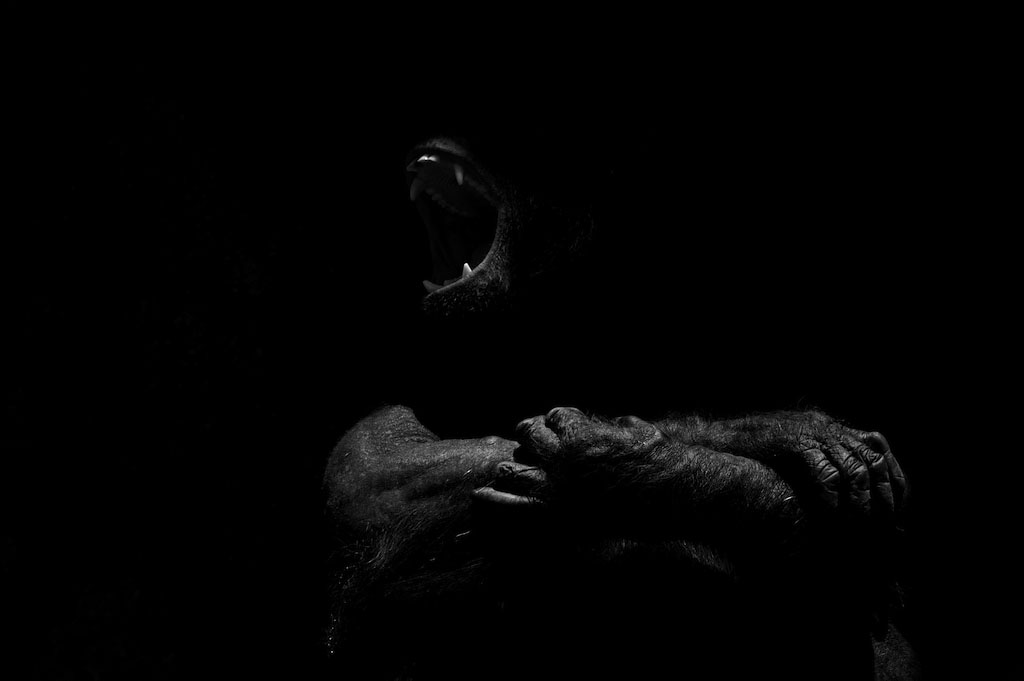
I first met Boza Ivanovic years ago, looking at his photographs of people living with HIV and AIDS around the world. The work was powerful in its ability to show the pathos of daily life for people burdened with this disease, people living in poverty in Africa, Russia, and the United States. We had been chatting about the possibility of doing a book, but then, things changed. Boza was in a motorcycle accident, and had been laid up for months. I hadn’t heard from him for some time, until he began to send me these stark and stunning portraits of animals he had started taking during his recovery.

.

The images, at once beautiful and captivating, were also very sad in many ways. The more I gazed upon these magnificent creatures, the more I began to notice I was looking at photographs of the incarcerated, sentenced to life behind bars and required to display themselves for our entertainment. And while I have always loved animals, the idea that they exist for our benefit, in conditions that would be inhuman if we confined people to them, was something that I can never forget when looking at these portraits.

.

I am thankful to Boza Ivanovic for granting this interview and sharing his work.

.

Photograph © Boza Ivanovic

Please talk in full about how this series came into being.

.

Boza Ivanovic: Since I first got a camera in my hands, people were not my primary interest. In my late teens early twenties, living it what is now known as the former Yugoslavia, I used to jump the walls in the zoos to get in, since I did not have enough money to pay for the ticket, to be able to photograph animals. These walls were at least six feet tall and were lined with broken glass and barb wire.

.

I would then spend at least half day taking pictures of the animals on display. I always felt deep sorrow for this encaged animals since I though they were in terrible unnatural conditions. Of course, the quality of my work back then does not compare with my work today but when I look back, these humble beginnings were the start of what I portrait today.

.

I did not focus on animals until after I was recuperating from a motorcycle accident. The picture that rekindled my love for animal photography was taken at the San Diego zoo in Southern California when I was there for the sole purpose of taking my then six year-old son. It was a photograph of a tiger. The beast, as I saw it, was in a perfect, mysterious combination of darkness and light.

.

Since then on, I focused all my energy to develop the kind of animal photography that would portrait the beauty, traits and characteristics of these encaged animas. I have come to know and  develop great admiration and respect for all the animals I have photographed since it requires quite a large amount of time and patients to have all the necessary elements to come together.

.

Photograph © Boza Ivanovic

.

I remember when I first saw the photos, there was a natural joy to looking at the animals, but as time went on I began to see how miserable these creatures are, basically being in jail for their entire lives. In many of your photos, there is a feeling that you are photographing inmates sentenced to life, with no chance of parole. Having spent so much time looking carefully at these animals, did you notice their emotional states, and how would you describe them?

.

Yes. If you think about it, these animals are in very unnatural situations. Limited to what the enclosed, and most of the time, inadequate dwellings. And this I say regardless of the fancy we may perceive in some of the zoos. The endless pacing of bears, leopards, wolves; the endless rocking-like motion of the elephant’s head. I have seen animal in their natural environment when in one assignment in Africa and I can tell the difference in behavior. This is very disturbing to me and specially the fact that some of these animals when born in captivity will never know what freedom means. What is it more cruel, the animal that has lost his natural environment after being captured, or the one that has been born in captivity?

.

Photograph © Boza Ivanovic

.

Your blackening out of the background further serves to underscore an unnatural environment, and focuses in on the animals themselves. What was your inspiration to focus exclusively on the animals?

.

I consider the majority of my photographs to be portraits. As such, I want people to “see” what I captured about that animal. By “blackening out” as you described it, unnatural elements such as bars and glass, I feel is the way to enhance the beauty, power, or any other characteristic of the animal.  By being a documentary photographer, I don’t want to disturb the surrounding, I just want to capture the moment as it is. I want the animal to speak for itself.

.

Are there any particular animals to which you keep returning, and why ?

.

Absolutely. Chimps. I keep returning because there is always something happening with or around them. Gorillas because I am not yet completely satisfied with what I have so far. They are also my favorite apes. And of course, I come back to those animal I have not yet captured and portrayed at all or to my satisfaction.

.

Photograph © Boza Ivanovic

Having spent so much time at zoos, what are your thoughts on the concept of locking up and displaying animals for our entertainment ?

.

Zoos are businesses and they exploit the natural desire we as humans have to see different animals specially those from the wild. However, I have observed many people at the zoo who do not know the difference between a cheetah and a jaguar, a gorilla and a chimpanzee. There are better and more economical ways to educate ourselves and our children about animals. It is cruel and egotistic from our part to capture these animals for our entertainment.

.

How do people react to your work? Do they see the pathos in these portraits, or are they, like the zoo-goer, simply enjoying the voyeuristic thrill of looking at animals up close ?

.

I have encounter both. People from the art field (magazine, books, galleries) tend to have a more sympathetic approach towards the animal. The common zoo-goer see them as interesting pictures and want to know how I got the picture, instead of being concern about the animal itself.

.

Photograph © Boza Ivanovic

.

www.bozaivanovic.com

Put Your Money Where Your Mouth Is

Categories: Art, Books, Photography

Ed Kashi: Curse of the Black Gold

Posted on May 24, 2010

The community of Finima on Bonny Island in the Niger Delta. This village was relocated to make way for the the Nigerian Liquified Natural Gas plant. Photograph © Ed Kashi

.

Curse of the Black Gold: 50 Years of Oil in the Niger Delta documents the profound cost of oil exploitation in West Africa. Photographer Ed Kashi and professor Michael Watts trace the environmental, economic, political, and social degradation of Nigeria following its independence from colonial rule. This is a new kind of humanitarian disaster, one to which the world turns a blind eye as they fill their pockets with profits.

.

Ed Kashi graciously agreed to speak about just some of the problems plaguing the nation, which is number 4 (following Canada, Mexico, and Venezuela) for U.S. Foreign crude oil imports with 948,000 barrels per day imported in 2010—which is nearly double the 473,000 barrels per day imported in 2009.

 .

In the Ogoniland village of Kpean, an oil well head that had been leaking for weeks has turned into a raging inferno. The local youths keep watch, waiting for Shell to come and put the fire out. This is an environmental disaster for the local people, as it effects their crops, their water and air. Near the village of Kpean in Ogoniland, a Shell oil wellhead leaks oil into the surrounding farm lands. Even though Shell has not been allowed to pump oil from its 125 wells in Ogoniland since 1993, they sill have wells that are leaking and often unattended or maintained. This lack of action, which pollutes the lands and forces farmers and fishermen out of work, makes relations between the local communities and Shell very fractious. This Shell oil well is more than 30 years old and this scenerio is typical of the kinds of ongoing problems with the oil works of the Niger Delta. Photograph © Ed Kashi

.

It’s funny (actually, not so funny) that when we were initially working on this book, the media response was fairly quiet, despite the importance of examining the practices of this industry. Now that the BP disaster has brought home just how dangerous this industry is, maybe there’s the opportunity for us to reexamine the way in which oil production destroys the environment in very really ways. What do you think has been the most dangerous aspect about oil production in Nigeria?

.

Ed Kashi: The most dangerous aspect of oil production in Nigeria is probably flaring of gas. The Niger Delta produces the largest amount of pollution in the world associated with gas flaring. Besides it being a waste of energy resource, it also creates acid rain for the local environment, air pollution and heat pollution. I would venture to say that the environmental problems don’t stop there and the local people might consider the pollution of their lands and waters, which as traditional fishermen, they were dependent on, carries the greatest burden.

.

At a Total gas drilling installation in Rivers State, a Chinese contracter, ZPED, works with Nigerians and the French company to drill for gas. This field is part of the only onshore oil exploitation that Total has in the Niger Delta. Total started here in 1968 and this is the 125th well they have drilled. The Chinese have started to make inroads in the delta and this is an indication of that. Photograph © Ed Kashi

.

I remember when you were giving a talk about this subject, you explained how difficult, if not impossible, it is for changes to be made, given the political and economic powers that support oil production. Please talk about the situation in Nigeria; how do U.S. interests support—if not exploit—Nigeria’s natural resources?

.


EK: American and British interests in the oil and gas resources of Nigeria have a tremendous impact on the ground in the Niger Delta. There is this unholy alliance between the international oil companies, the Nigerian government and military and in essence and practice the US and British governments. As long as the oil and gas flows outbound to American markets, which incidentally take 50% of Nigeria’s oil, then there is a nasty tendency to look beyond the troubling issues of the Delta. This is an insidious trend in most places in the world that produce sizable quantities of oil and gas.

.

For me it more profoundly prods one to want a change of how we do business. A change away from fossil fuels and towards renewables. Let’s face it, the profits are too huge and our dependency too great to stop this ugly alliance, but it’s certainly not sustainable for the long haul.

.

Militants with MEND (Movement for the Emancipation of the Niger Delta) brandish their weapons in the creeks of the Niger Delta. Here they check a former Nigerian Army floating barracks that they had destroyed in March of 2006. 14 soldiers died in that attack and due to acts like this by MEND, 20% of Nigeria’s oil output has been cut. Photograph © Ed Kashi

.

How has the struggle on the part of the Nigerians to fight against the oil industry played out over the years? Is it possible for an internal rebellion to drive out the oil companies?

.

EK: While an internal rebellion could have grave consequences on the oil industry and hence, on the stability of the Nigerian government, I don’t think it’s possible to completely shut down the oil and gas industry in the Delta. Before that would be allowed to happen I suspect that American military force would be brought in. And even before that, the Nigerian military would go to even further lengths to snuff out any insurgency. This scenario would create an ugly and destructive situation that would destabilize Nigeria. To consider that Nigeria is the most populace country in Africa with over 140 million people, it’s unthinkable for this to occur. Before the oil companies would be forced to leave, there would be much worse consequences for all of West Africa.

 .

The home of Papa Isamu lays sunken in sand since 2004, when the encroaching waters of the Niger Delta creeks eroded the unprotected shoreline. In this town of 20,000 located in the middle of the Delta, hundreds of homes have been lost to this same fate. The local residents are bitter about the lack of protection that the oil companies and government have provided for them, while the oil industry has been allowed to protect their facilities and been allowed to dredge the nearby waters, which has only exacerbated the problems of the local communities. Erosion is one of the main environmental impacts of the oil industry. Photograph © Ed Kashi

.

Please talk about the standard of living in Nigeria, and how this compares to the value of the product that is exported. Why do you think the Nigerian government does not support its infrastructure and its people with the possible earnings of its major product?

.

EK: The Niger Delta is a very poor and underdeveloped place. In fact, since the discovery of oil in the late 1950s the standard of living for the people there has gone down. It’s unimaginable to consider that in the past 51 years more than 700 billion dollars of wealth has been generated from oil and gas in Nigeria and the fate of the people and environment in the region where that rich resource comes from has been hurt economically.

.

The reasons are many but mainly stem from a lack of consideration for the people of Nigeria. Let’s face it, the Niger Delta is not any poorer than the poorest parts of Africa. What makes the lack of development and economic gain for the people of this region so profound is this “poverty amidst plenty.” Successive governments in Nigeria has plundered the region, disregarding the needs of the people. Certainly corruption plays a central role in this sad fate. Both systemic and personal corruption on a scale that is hard to imagine.

.

Further is the ethnic racism that informs this dynamic. The people who control Nigeria tend to be from the Muslim north, or at the very least from different ethnic groups in this diverse and divisive nation. This further fuels the lack of desire to create parity, let alone share the wealth to a degree that would enable the locals to develop their region. To consider that in 50 years not one technical institute has been created in the Niger Delta to train the locals says it all.

.

Ogbaland is a tribal area of the Egi people and is comprised of 20 communities nearby each other. They all consider King Egi their leader. He has been king for 25 years. This clan is in the Ogba/Egbemoa/Ndoni local government area. Celebration of the Egi New Year, which is tied to the harvest season and lunar calendar, takes place in August. It is also the New Yam Festival, which augers in one month of relaxing before farming and fishing begin again. The King and Queen of Ogbaland are the centerpiece of the event, which involves families from all 20 communities of the clan. They bring burning shoots and offerings to the King and the scene is one of mayhem, drunken fun and mock violence with guns, knives, axes and machetes brandished. The crowned prince, Chika Elenwa, is in the black longcoat and brandishes a sawed off pump action shotgun. Photograph © Ed Kashi

Scenes of daily life in the oil city of Warri, in the Niger Delta. Warri is a troubled town, with rampant poverty, unemployment, angry and violent youth and a crumbling infrastructure. Yet oil wealth is created in and around this area. In the tiny village of Ubeji, which is an ethnic Shakiri community near an NNPC (Nigerian National Petroleum Company) refinery, collect sand from the creeks for sale. Photograph © Ed Kashi

.

G. Ugo Nwokeji’s essay, “Slave Ships to Oil Tankers” draws a parallel between the two major industries of Nigerian history that were designed to service Western interests, and asserts “A time may come when oil will be viewed in a manner not unlike eighteenth-century slavery, the greenhouse gases emitted from hydrocarbons perhaps akin to slave-produced sugar, and free labor as a parable for renewable energy.” Do you believe it is possible for our global economy to function without oil, or would it take something like the Civil War for change to happen here?

.

EK: I dream of a day where we have moved past oil and gas. I know that dream will not be realized during my time on this earth but it is possible to witness the first steps of this dream to be realized. What it will take is the vision, strength of leadership and coordinated efforts of many nations to realize the need for this to happen. A civil war would not bring this change, nor will a collapse of our economic system. Unfortunately nor will the catastrophe in the Gulf of Mexico we are helplessly watching develop.

.

I fear we are destined to be cursed by our addiction to a drug that is destructive at every point of it’s process. We don’t seem to learn from our mistakes and the greed of humans continues to hold sway over reason. But isn’t this how addicts behave? Furthermore, who is willing to give up the lifestyle we have become accustomed to in large parts of the world? The hydrocarbon myth has been beautifully perpetrated on us all, especially in America were the cost of this addiction is relatively cheap.

.

.

www.curseoftheblackgold.com
Check Out the Film!

Categories: Africa, Art, Books, Photography

Janette Beckman: “When I First Arrived in NYC in 1982, Hip Hop was New and Fresh”

Posted on May 19, 2010

Grandmixer DST, Photograph © Janette Beckman

Janette Beckman and I were invited to appear on WFMU’s “Coffee Break for Heroes and Villains with Noah” on Tuesday, June 1 from 9am–noon, to discuss the art of Hip Hop photography. I first met Janette back when we were working on Made in the UK: The Music of Attitude, 1977–1983, a retrospective of her career documenting the Punk, Mod, Skinhead, 2 Tone, and Rockabilly culture in the UK.

.

It was during that time that Janette showed me a copy of her first book, Rap, with Bill Adler, showcasing her work from the burgeoning Hip Hop scene during the 1980s. Needless to say, I fell off my chair when I caught a glimpse of her photographs, many of which have become icons unto themselves. From this, inspiration was born, and Janette published her third book, The Breaks: Stylin’ and Profilin’ 1982–1990, which she kindly allowed me to subtitle after her original subtitle, Kickin It Old School, appeared as the name of a corny Jamie Kennedy movie coming out at the same time.

.

Janette has photographed the likes of… EVERYONE. Check out this list, it is legendary: Afrika Bambaataa, GrandMaster Flash and the Furious Five, the Fearless Four, the World Famous Supreme Team, Lovebug Starski, Salt’n’Pepa, Run-DMC, Stetsasonic, UTFO, Roxanne Shante, Sweet T, Jazzy Joyce, Slick Rick, Boogie Down Productions, Eric B. and Rakim, EPMD, NWA, Ice-T, 2 Live Crew, Tone Loc, Gang Starr, Ultramagnetic MCs, Rob Base and DJ EZ Rock, Special Ed, Leaders of the New School, Jungle Brothers, Beastie Boys, Rick Rubin—and more! Hell, honey, even shot Jomanda! That’s for real. Got a love for you. You know, I just had to do this interview…

.


How did you get into shooting Hip Hop?

.

Janette Beckman: I was working for a British music magazine called Melody Maker when I saw my first Hip Hop show back in 1982 in London. The show featured Afrika Bambaata, Grandmixer DST, Futura 2000, Dondi White, breakdancers, and double dutch girls.  It was absolutely mind blowing—we had never seen anything like it—and it seemed to me to be the new Renaissance in music, art, fashion and dance.

.

FUTURA and DONDI, Photograph © Janette Beckman

Being from the UK punk scene what did you make of it?

.

JB: The punk scene in London had reached it’s peak and I think everyone was looking for the next new thing. Hip Hop was much like the UK punk scene when it first started: so creative, groundbreaking, and in many ways both movements came from the streets—art and music created by “working class” kids who were inventing new things never seen before.

.

What was Hip Hop like back in the days, when artists were first getting record deals, but still didn’t have the marketing machine behind them?

.

JB: When I first arrived in NYC in 1982, Hip Hop was new and fresh. It seemed to me as an outsider coming from UK that the artists were free to do what they wanted, the music came from the streets and really told stories of what was happening in peoples lives, from the political like “The Message” and Public Enemy, to the raps about love, girls, sex, sneakers.

.

Anything seemed possible and the small record companies were much more interested allowing the artists to have creative freedom from the way they dressed to the beats and the raps. There was an amazing creative energy—riding on the train hearing some kid rhyming, seeing girls wearing the first giant hoop earrings, the fake LV outfits, the new way to lace your sneakers, the graffiti. Of course this was before MTV, stylists, the Internet started to dictate the way you were supposed to look.

.


Looking through The Breaks, I am totally blown away. You shot some of the photos that have long been burned into my brain. What was your favorite shoot, and why?

.

JB: My favorite shoot was for the British magazine The Face. They asked me to photograph the emerging Hip Hop scene and sent me out to Queens on a warm summer day in 1984 to photograph a group called Run-DMC. I took the subway to Hollis where Jam Master Jay met me at the station and walked me to the leafy block where they were hanging out with some friends. I just took out my camera and started shooting. The photo of Run DMC and posse is one of my favorites because it is such a moment in time. Totally unposed.

.

Photograph © Janette Beckman

Please talk about your Ladies of Hip Hop shoot for Paper, as that photo is a classic!

.

JB: I had been working for Paper magazine since their first issue. They told me they were gong to get the Ladies of Hip Hop together for a shoot. I think it was in a Mexican restaurant on West Broadway. The ladies started to arrive and the boys were told they had to leave. Ladies only this time. What an amazing group—all getting along so well and having fun—and Millie Jackson was there, the “Godmother” of it all.

.

Eazy-E, Photograph © Janette Beckman

Please talk about shooting Eazy E, as I find this photo so touching. No profiling, no posing, no gangsterism in Eric. I love it…

.

JB: I was working on the final shots for my first book and had traveled to LA to shoot the important West Coast scene. NWA were recording their new album in a studio in Torrance and had agreed to have me shoot them. There was an alley at the side of the studio and I asked the group to pose for me. I only took a couple of shots of each of them.

.

We were talking about the recording. They liked my British accent and asked if I would be up for reading some lyrics on their album (it turned out to be lyrics about how to give the perfect blow job, which I thought maybe would not be right for my debut in the recording industry).

.

What do you think about the way Hip Hop has changed—as an economic force, a global culture, an art form, and a way of life for so many people of all ages?

.

JB: Hip Hop has really changed the world. I love the idea that people are rhyming in Africa, India, France in every language. What some people thought was a fad is a now, thirty years later, a worldwide phenomena used for advertising, soundtracks, TV, billboards. Artists like M.I.A, Ben Watt, and Santogold are mixing Hip Hop with their own beats and making some thing completey new—much like Hip Hop artists took disco and R&B beats and made them their own. And still kids on the street
around the world are keeping Hip Hop real.

.

.

www.janettebeckman.com
Don’t Stop! Get It! Get It!

Categories: 1980s, Art, Books, Bronx, Brooklyn, Fashion, Manhattan, Music, Photography

Marcia Resnick: Re-Visions

Posted on May 5, 2010

EMPIRE STATE OF MIND, a group show curated by Jacob Fuglsang Mikkelsen featuring works by Victor Bockris, Bess Greenberg, Ellen Jong, Anton Perich, Marcia Resnick opens at the Copenhagen Photo Festival, Denmark, from May 13 – 20, 2010. Marcia Resnick has graciously granted me an interview to discuss her work, “Re-visions”, which will be featured in the show.

 .

Photograph © Marcia Resnick

.

I love the way your work explores the precocious aspects of childhood. All to often, we forget that kids have their own secret desires. What was your inspiration to revisit the private life of your childhood?

.

Marcia Resnick: In 1975, while driving my car in Manhattan, I became embroiled in a car accident which left me unconscious and internally bleeding. When I awoke in the hospital, my entire life flashed before me.  I began to think about all of the events which led to my being there, daily dissecting my life with a linear historical perspective.  After I returned home, I began to write ideas and draw pictures in preparation for doing a book which considered my life thus far, with both a sense of poignancy and irony.

.

Photograph © Marcia Resnick

.

I like how you subvert the seeming purity of 1950s America, particularly with the cowgirl and Howdy Doody images. What was it like growing up at that time, and how did it inform your work as an artist?

.

MR: I was raised in a middle class home in suburban Brooklyn by Jewish American parents who were very strict and authoritarian.  Television was a large component of life in the 1950’s…Hopalong Cassidy, Howdy Doody and the more artistically stimulating Winky Dinks and Jon Gnagy were fixtures in my childhood, in addition to the popular playthings advertised on television such as slinky toys and hula hoops. I had a special fondness for Jon Gnagy and religiously learned how to draw by watching him on television.

.

Photograph © Marcia Resnick


Photograph © Marcia Resnick

.

The piece that explores the fear of being wallflower within the company of children at the school dance is the perfect foil to the image that has your subject being told not to look at her feet in the company of adults. I find it interesting that in one context the girl is an extrovert; in another she is an introvert. Please speak more about this dynamic.

.

MR: Peer pressure has always been a motivating factor influencing the behavior of children.  The desire to be liked by other children is quite different though than the desire for the approval of adults. This dynamic speaks to this difference.

.

Photograph © Marcia Resnick

.

For your piece captioned “She was often gripped with the desire to be elsewhere”, how did that desire take you to New York City?

.

MR: That desire took me “all the way” from Brooklyn to Manhattan when I moved there at sixteen years old to study art at NYU and then, Cooper Union after which I went to graduate school in California at California Institute of the Arts.  That desire also took me to Europe, Mexico, Central America, Morocco, Egypt and the South Seas and Japan and China in years to come.

.

This work was made in 1978, a very edgy period in New York City’s history. Did your environment in any way play into the themes you are exploring here?

.

MR: I moved to Tribeca in 1975. I was teaching photography at Queens College and NYU. I did the bulk of the work on “Re-visions” in 1976.  It took two years to get it published, during which time I frequented artist’s bars and music clubs at night and Soho art galleries on weekends. There was a palpable electricity in the cultural milieu of NYC at that time. The downtown artists scene was a hotbed of aesthetic creativity. I drew inspiration from the contemporary art and music scenes.

.

More Visuals!
www.copenhagenphotofestival.com

Categories: 1970s, Art, Books, Exhibitions, Photography

April Flores: Fat Girl

Posted on May 4, 2010

Photograph © Carlos Batts

.

I was introduced to April Flores through photographer Carlos Batts, who I have known for the better part of this decade. I had seen photos of April for years, as she was Carlos’ muse, and inspired a great many hardcore photos that made me blush to my roots.

.

The thing that intrigued me were the photographs of April, where she was fully dressed, as she has a style unlike anyone else I have ever met. Changing her look with the drop of a hat, April’s photographs remind me of the work of great models.

.

Photograph © Carlos Batts

But there was one thing that made her distinct—her weight was not going to be getting her contracts with Ford any time soon. But the way in which April carries her body makes me envy her ever time I neurotically try to lose five pounds.

I have been captivated by the way in which April presents herself, and approached April and Carlos about the possibility of doing a book. FAT GIRL it was to be called, and I had shown her photos around the office. Needless to say, the response from everyone, save one (slim) woman was truly negative. I heard it all, from the usual anger directed towards overweight people, to the unexpected backlash from women against April’s sex appeal.

While the book never came into existence, I think it’s impressive that fashion magazines are finally beginning to consider the appeal of voluptuous women. With Christina Hendricks making the cover of Esquire’s Women We Love issue, it’s clear that the size zero is getting serious competition.

My thanks to April for graciously sharing her story and to Carlos for these beautiful photos.

Photograph © Carlos Batts

.

FAT GIRL
Story by April Flores

.

I think the first incident that made me conscious of my body happened in the 7th grade. I overheard my crush talking to his friend and two other girls in our science class. The girls were asking the guys to rate all the other girls in the class going one by one. When they came to me, my crush said something like “she has a pretty face, but she’s too fat.” I was shocked and hurt and humiliated. First, because one of the girls was a “friend” of mine (girls can be so cruel sometimes) second, because my crush had said something negative about me. But I was mostly hurt because I had done nothing to provoke them to say anything mean about me.

.

Photograph © Carlos Batts

.

From then on, I looked at myself differently in the mirror. I had always known that I wasn’t a skinny person; I was average sized. In elementary school I had friends and classmates that were much thinner and much bigger than me. I hated PE and playing sports. The fact that I wasn’t skinny wasn’t a surprise to me. The fact that people were now judging me on my weight was.

.

I was now aware of how I looked, and I always dressed so that my fat rolls wouldn’t show thru my clothes. I dreaded wearing the PE uniform because the inside of my thighs rubbed together, so I was always pulling them down passed my thigh area.

.

I was very fortunate in the fact that I had good skin, so acne was not a problem, but my size played a huge roll in my self-esteem. I thought that happiness would come if I were thinner. I believed that I would have a boyfriend, and my life would be perfect if I was just skinny.

.

Photograph © Carlos Batts

.

Not much changed through out the rest of my Junior High experience. In 8th grade I learned from the class jerk that I had big boobs. He was asking all the girls if their mothers had big boobs. When he came to me, he pointed and loudly said, “Your mom had big boobs!” I was so embarrassed.

.

In the 10th grade I joined the swim team with a friend. Our goal was to get a tan and get into shape. Being on the swim team was a lot of fun, and did get me into shape. I hated the swim meets because I am not a competitive person, so I could care less if I won or lost a race. But I loved watching the cute guys swim, all muscle-y, tanned and wet!

.

I did notice that people were treating me different in slight ways now that I was thinner. It’s hard to explain, but it’s like they were nicer to me in some strange way. This really confused me because it wasn’t just the boys at school. Family members, people of my same gender and strangers all seemed more pleased with my body size and thus with me.

.

In 11th grade my parents got divorced and there was a lot of turmoil in my home life. I suddenly gained about 50 pounds (putting me at 180) during my junior year of High School. It just came out of nowhere (it seemed.) I guess I had comforted myself with food… delicious fried food.

.

I talked to a few boys on the phone here and there, but I never had a boyfriend who went to my High School. I did get teased about my breast size. There was a group of boys who would shout out “TITTERS” every time I walked by them. This made me very uncomfortable, and made me wish I had an older brother to kick their asses.

.

Photograph © Carlos Batts

.

My first “boyfriend” had really bad acne, but I was fat so I figured that was the trade off. He would be really cute if he had better skin, and I would be really cute if I lost some weight. It’s funny now.

.

After I graduated high school and before the fall quarter of my first year in college I was enrolled into a summer program at my college. This program was really great because we got to stay in the dorms, go to classes, and they even gave us a food stipend. It really prepared me for college life. Since I was away from home for the first time, I was now responsible for what I ate. The school’s food court was average, and I mostly ate chicken sandwiches, Jello and fruit. I started losing weight but not because I was trying. It was just coming off. I was happy about it because I wasn’t trying. (The truth is that I was only eating once a day.) I didn’t have much of an appetite. Plus I read somewhere that your metabolism is at its fastest between the ages of 18-23.

.

When I was 18 I left the dorms and got my own place. I never had food at my house and I was in an emotionally crazy relationship, practically fighting everyday, which also curbed my appetite. By the time I turned 21 I was at my thinnest ever, 123 lbs.

.

Photograph © Carlos Batts

.

While I was losing the weight I heard many odd comments. A few people asked me if I was on drugs. A friend’s mother asked me if I was ill. However, most of the feedback I was getting was very positive. Everyone was very happy for me and if I hadn’t seen them in a while, they were especially vocal about my weight loss. I was getting a lot of attention from guys, and fitting into smaller, cuter clothes. This all made me feel very happy and confident. I was having fun, but it didn’t make my life easier in any way.

.

When I was about 23 I had a job as a receptionist. I was sitting for the majority of my day. My favorite dinner consisted of a hot dog, lime flavored chips and salsa. I slowly started gaining weight. I was fine with it. I was at a point in my life where I was becoming very comfortable and happy with the person that I am. I had a cute little apartment, my own little car, and I was single and loving it. Even though I had been living on my own for 5 years, this was the first time I had really embraced the freedom I had of just living my life.

.

Photograph © Carlos Batts

.

People around me started to drop little comments here and there about my weight gain. It was so strange to me because it bothered them more than it bothered me. I didn’t care. I was happy, and I finally realized that happiness is a choice. Happiness won’t come in a size 6 or in a man. I was happy with myself and I wasn’t going to let anything affect that. I never wanted to go back to that insecure person that I was, letting other people’s comments get into my head.

.

Since then my weight has gone up and down the scale. Those are my genetics. I’m a Latina—we have curves, big hips, big arms, and bigger frames. I know if I want to lose weight I have to eat less and move more. That’s it; it’s just as easy as that.

.

Photograph © Carlos Batts

.

www.carlosbatts.com
April Flores Website

Categories: Books, Photography, Women

« Older entries    Newer entries »

Categories

Archives

Top Posts

  • Home
  • About
  • Marketing
  • Blog
  • Azucar! The Life of Celia Cruz Comes to Netflix in an Epic Series
  • Eli Reed: The Formative Years
  • Bill Ray: Watts 1966
  • Jonas Mekas: I Seem to Live: The New York Diaries 1950-1969, Volume 1
  • Mark Rothko: The Color Field Paintings
  • Imprint

Return to top

© Copyright 2004–2025

Duet Theme by The Theme Foundry